

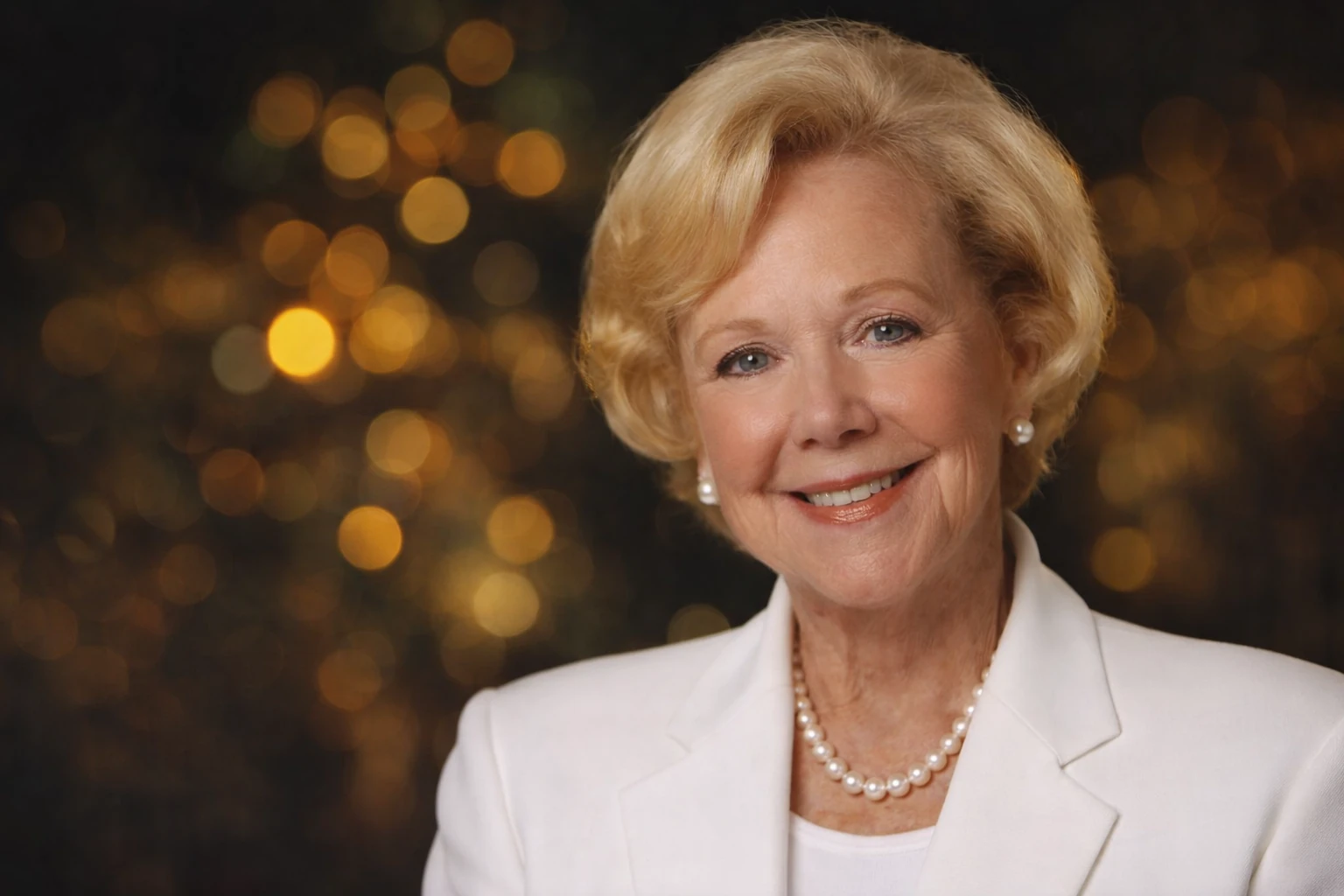
There’s a moment in nearly every American success story when the spotlight grows so bright that it washes out everything around it. Ray Kroc rise with McDonald’s is one of those stories. It’s been told in documentaries, corporate histories, and even Hollywood films. But just outside that glare sits a quieter figure — his only child, Marilyn Kroc Barg — whose life never fit the narrative people wanted to tell.
She wasn’t a public figure, and she didn’t try to be. There are no televised interviews, no memoirs, no carefully curated foundation archives attached to her name. What remains instead are fragments: birth records, marriage listings, a death notice from 1973, and the steady curiosity of people who sense there’s more behind the absence. The truth is both simpler and more revealing than the myths that have grown around her.
Early Life and Family Roots in Chicago
Marilyn Janet Kroc was born on October 15, 1924, in the Chicago area, at a time when her father was still far from becoming a household name. Ray Kroc was then working as a salesman and musician, piecing together a living in the Midwest. Her mother, Ethel Janet Fleming, had married him in 1922, and by all accounts, their early years together were modest and grounded in ordinary Midwestern life.
Growing up in Illinois during the 1920s and 1930s meant living through a country in flux. The Great Depression reshaped families across the nation, and while detailed accounts of Marilyn’s childhood are scarce, the broader context tells you something important. This was not a childhood of corporate privilege or inherited wealth. It was shaped by the same economic uncertainty that defined the era for millions of Americans.
Family records place Marilyn’s upbringing in and around Chicago’s suburbs, including Evanston. That region, known for its mix of working-class neighborhoods and emerging suburban communities, would have given her a fairly typical American upbringing. She attended local schools, though specific institutions aren’t widely documented, and lived within a family that, at the time, had no reason to expect global fame.
Growing Up Before McDonald’s Changed Everything
What’s easy to forget is how late Ray Kroc’s success arrived. He didn’t step into the McDonald brothers’ restaurant in California until 1954, when Marilyn was already 29 years old. By then, she had lived through childhood, adolescence, and early adulthood without the shadow of a global brand looming over her.
That timing shaped her life in ways that are often overlooked. She wasn’t raised as the daughter of a fast-food empire. Instead, she witnessed her father’s transformation from a traveling salesman into a businessman with an expanding vision. That shift didn’t happen overnight, and it certainly didn’t come with the polished image people associate with McDonald’s today.
Anyone who has watched a parent chase a late-in-life ambition will recognize the tension that can come with it. While there are no detailed personal accounts from Marilyn herself, the timeline suggests she experienced a family dynamic that was evolving rapidly. Her father’s increasing focus on business likely brought both opportunity and strain into their household.
Marriage, Personal Life, and Changing Names
By the time McDonald’s began its explosive growth in the late 1950s, Marilyn had already entered adulthood and started building her own life. Records show she first married Sylvester Nordly Nelson, though details about that marriage remain limited. Later, she married James Walter Barg, taking the surname by which she is most often identified today.
The name “Lynn Barg” appears in her 1973 death notice, a small but telling detail that reflects how she was known in her later years. She lived in Arlington Heights, Illinois, and had previously resided in Evanston, keeping her life rooted in the same general region where she was born.
By all accounts, Marilyn’s personal life remained private. There are no widely available records of public appearances, business roles, or high-profile social engagements. That absence doesn’t mean her life lacked meaning or depth. It simply means she chose, or was able, to live outside the public gaze, even as her father’s name became increasingly recognizable.
A Family Story Marked by Change
The Kroc family itself was undergoing major transitions during Marilyn’s adult years. Ray and Ethel Kroc divorced in 1961, the same year Ray finalized his deal to acquire the McDonald brothers’ business. That convergence of personal and professional turning points is striking.
Divorce in that era carried a different weight than it does today. It often reshaped family relationships in ways that weren’t openly discussed. For Marilyn, it meant navigating a family that was both fragmenting and rising into wealth at the same time. Her mother, Ethel, died in 1965, adding another layer of loss within a relatively short period.
Ray Kroc would go on to marry Joan Kroc, who later became widely known for her philanthropy. But Marilyn’s place in that evolving family structure remains largely undocumented. What can be said is that she lived through a period of significant change, both within her family and in the broader American business landscape.
Financial Standing and Relationship to the Kroc Fortune
Here’s where many modern biographies start to drift into speculation. It’s tempting to assume that being the only child of a man who built a multibillion-dollar company automatically translates into wealth and influence. But the timeline complicates that assumption.
Marilyn died on September 11, 1973, at the age of 48. Ray Kroc, by contrast, lived until 1984. That means she did not inherit his estate in the way people often imagine. The most widely known philanthropic efforts associated with the Kroc name, including massive donations made by Joan Kroc, occurred after Marilyn’s death.
There are no reliable public figures for Marilyn’s personal net worth. Any estimates that circulate online tend to be speculative and unsupported by primary sources. What can be said with confidence is that she was connected to the early stages of a growing business empire but was not present during its most financially expansive and publicly visible phase.
The Final Years and Her Death in 1973
Marilyn’s life ended relatively early, and the records surrounding her death are brief but clear. A Chicago Tribune notice from September 13, 1973, identified her as “Lynn J. Barg,” confirming her identity and family connections. She was 48 years old.
The cause of her death is not widely documented in credible public sources, which has led to further speculation in less reliable accounts. Responsible reporting stops where the record stops, and in this case, that means acknowledging the gap rather than filling it with guesses.
Her death came just one year before the first Ronald McDonald House opened in 1974. That timing matters because it places her outside the chapter of the Kroc family story that would later be defined by large-scale philanthropy and global recognition.
Lesser-Known Details That Add Depth
Not many people know this, but Marilyn’s life intersected with one of the most important shifts in American business history without ever becoming part of its public narrative. She lived through the exact years when fast food transformed from a regional convenience into a national system, yet she remained outside the spotlight that transformation created.
Another detail that stands out is how consistently her life remained tied to Illinois. Even as McDonald’s expanded across the country and eventually the world, Marilyn stayed close to her roots. That choice, whether deliberate or circumstantial, suggests a life grounded in familiarity rather than expansion.
What’s surprising is how often her story gets rewritten to fit a more dramatic arc. Some accounts portray her as deeply involved in philanthropy or business leadership, but those claims rarely come with verifiable evidence. The truth is quieter and, in many ways, more relatable.
Finally, her absence from public memory says something about how history is recorded. Corporate milestones, financial deals, and brand expansions are carefully documented. The lives of family members who don’t step into those arenas often aren’t.
Why Her Story Still Resonates
There’s a reason people keep searching for Marilyn Kroc Barg. It isn’t just curiosity about a famous surname. It’s the sense that her story represents something broader about how families and legacies work.
When a business becomes as large as McDonald’s, it creates a narrative that can feel almost mythic. Founders are celebrated, milestones are commemorated, and philanthropy is highlighted. But real families are more complicated than those narratives allow. They include people who don’t fit the script, who live ordinary lives alongside extraordinary events.
Marilyn’s story invites a different kind of reflection. It asks readers to consider what gets remembered and what doesn’t, and why. It also reminds us that not every life connected to fame is defined by it.
Frequently Asked Questions
Who was Marilyn Kroc Barg?
Marilyn Kroc Barg was the only child of Ray Kroc, the businessman who built McDonald’s into a global chain. She was born in 1924 in Chicago and lived most of her life in Illinois. Unlike her father, she remained a private individual with little public documentation about her personal or professional life.
How did Marilyn Kroc Barg die?
She died on September 11, 1973, at the age of 48. Public records confirm the date and location, but the cause of death is not widely documented in reliable sources. Many online claims about her death should be treated carefully unless supported by credible evidence.
Did Marilyn Kroc Barg have children?
There is no widely confirmed public information about whether she had children. Some sources suggest possibilities, but they are not supported by strong documentation. The absence of clear records has contributed to ongoing curiosity about her family life.
Was she involved in McDonald’s business?
There is no credible evidence that Marilyn Kroc Barg played a role in the operations or leadership of McDonald’s. By the time the company began its major expansion, she was already living her own life outside the business. Her connection to McDonald’s is primarily through her father.
Did Marilyn Kroc Barg inherit Ray Kroc’s wealth?
No, she did not inherit his estate in the way many assume, because she died in 1973, more than a decade before Ray Kroc’s death in 1984. The major philanthropic legacy associated with the Kroc name developed after her passing.
Conclusion
Marilyn Kroc Barg’s life doesn’t fit the usual mold of a biography tied to a famous name. There are no sweeping achievements to catalog or public milestones to celebrate. What remains instead is a quieter story, one shaped by timing, family dynamics, and the unpredictable nature of history.
Her life unfolded alongside one of the most significant business transformations of the 20th century, yet she remained largely outside its public narrative. That contrast is what makes her story compelling. It reminds us that history often focuses on the loudest voices while leaving others in the margins.
There’s something human about that imbalance. Not everyone connected to a famous figure becomes part of their legend. Some live their lives in ways that don’t attract attention, and their stories survive only in fragments.
Looking back, Marilyn Kroc Barg stands as a reminder that every headline story has quieter chapters. Those chapters may not be as widely told, but they are no less real. And sometimes, they are the ones that leave the deepest impression once you take the time to notice them.
