

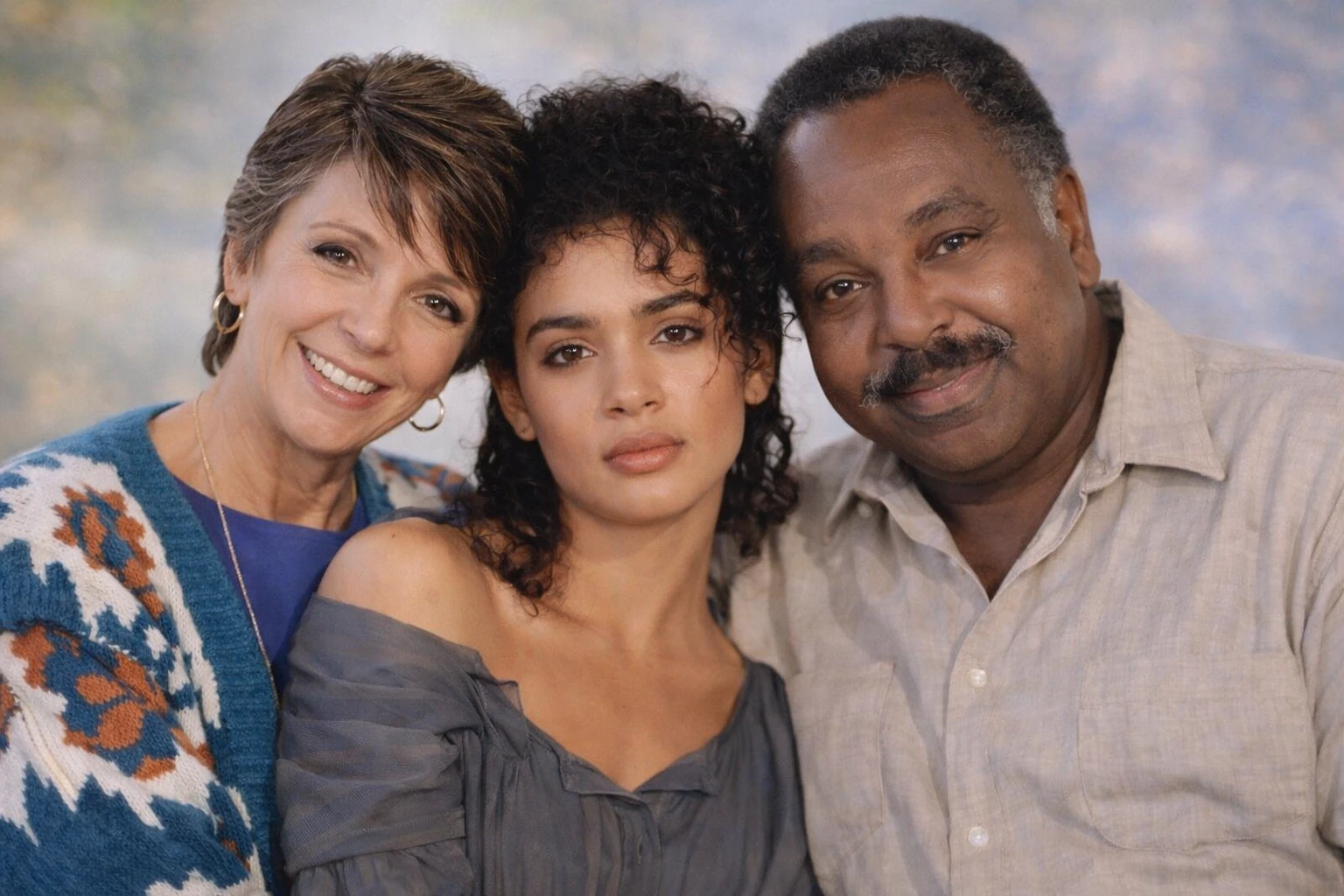
Born in 1940 and gone by 1998, Litman’s life unfolded largely outside public view. There are no tell-all interviews, no memoirs, no red carpet photographs. What remains instead are fragments—biographical notes, family recollections, and the echoes found in the lives she helped shape. Those fragments, when pieced together carefully, reveal a portrait of resilience, quiet influence, and a legacy that didn’t depend on recognition.
Early Life and Family Background
Arlene Joyce Litman was born on February 11, 1940, in Pittsburgh, Pennsylvania, a city that in those years was defined by steel mills, tight-knit neighborhoods, and strong immigrant roots. She grew up in a Jewish household, part of the Ashkenazi Jewish community that had established itself in American cities through hard work and shared traditions. Families like hers often placed a deep emphasis on education, discipline, and cultural continuity, values that would later shape her own approach to parenting.
By all accounts, Litman’s early life followed a familiar mid-century American rhythm. School, family obligations, and the expectations of a society that still had rigid ideas about women’s roles. Opportunities for women were expanding slowly, but not fast enough to erase the pressures of conformity. Teaching, however, stood out as one of the few professions where women could build stable, respected careers, and it’s no coincidence that Litman chose that path.
Sometime during her early adulthood, she moved west, eventually settling in California. That move mattered. Southern California in the 1960s and 1970s was a place of cultural shifts, experimentation, and tension, especially around race and identity. It was also where she would meet Allen Bonet, an African American opera singer whose career and background contrasted sharply with her own.
Relationship with Allen Bonet and a Changing America
The relationship between Arlene Litman and Allen Bonet unfolded during a period when interracial relationships were still controversial in many parts of the United States. The Supreme Court’s landmark Loving v. Virginia decision, which struck down bans on interracial marriage, didn’t arrive until 1967. That means their relationship existed at the edge of social acceptance, especially outside progressive urban pockets.
Allen Bonet was a trained opera singer from Texas, known for his rich baritone voice and work in classical music circles. Their connection brought together two very different worlds: Litman’s Jewish upbringing and Bonet’s Black Southern roots. It’s easy to romanticize that pairing now, but the truth is that such relationships often carried real social consequences, from subtle exclusion to open hostility.
Their daughter, Lisa Michelle Bonet, was born on November 16, 1967. Not long after her birth, the relationship between Litman and Bonet ended. Accounts vary on the exact timing, but most agree that Lisa was still very young when her parents separated. From that point forward, Arlene Litman became the primary parent, raising her daughter largely on her own.
Raising Lisa Bonet in Southern California
Litman raised Lisa in Reseda, a neighborhood in the San Fernando Valley that, at the time, reflected a mix of working- and middle-class families. This wasn’t Hollywood glamour. It was suburban life with its routines, constraints, and occasional isolation. For a single mother working as a teacher, stability came from consistency rather than abundance.
Lisa Bonet has spoken in interviews about feeling out of place during her childhood. She described herself as a shy and often isolated child, struggling to fit into environments where her mixed heritage made her stand out. Those feelings weren’t unusual for biracial children of that era, especially in communities that hadn’t yet caught up with the country’s changing demographics.
Arlene Litman’s role in that environment was complex. She had to provide emotional support while also navigating cultural differences she couldn’t fully experience herself. Anyone who’s raised a child knows how difficult that balance can be, even in simpler circumstances. In Litman’s case, she was doing it while working full-time and without the daily presence of a co-parent.
Career as a Teacher
Teaching defined much of Arlene Litman’s adult life. While detailed records of her career are limited, consistent references describe her as a schoolteacher, often specifically a music teacher. That detail fits neatly into the broader family story, where artistic expression seems to run through multiple generations.
A teacher’s life isn’t glamorous, but it’s deeply influential. It involves shaping young minds, managing classrooms, and maintaining patience through long days. In Litman’s case, that professional discipline likely carried over into her parenting style. She would have been used to structure, planning, and guiding others, qualities that become invaluable in a single-parent household.
What’s surprising is how little attention is paid to this aspect of her life in popular retellings. The focus tends to stay on her connection to Lisa Bonet, rather than the daily work she did. Yet that work formed the foundation of her family’s stability. Without it, the path that led Bonet to acting—and later to stardom—might have looked very different.
Lisa Bonet’s Rise and a Mother’s Influence
Lisa Bonet’s career began to take shape in the early 1980s when she landed roles in television and film. Her breakthrough came with The Cosby Show in 1984, where she played Denise Huxtable, a character that quickly became a cultural touchstone. Bonet’s performance stood out for its naturalism and quiet confidence, traits that felt distinct even in a show filled with strong personalities.
It’s difficult to separate that presence from her upbringing. Bonet’s sense of individuality, her reluctance to conform to Hollywood expectations, and her thoughtful approach to fame all point back to her early environment. Arlene Litman didn’t just raise a child; she raised a person who would resist easy categorization.
By the late 1980s, Bonet had become a recognizable face in American entertainment. She starred in films like Angel Heart (1987) and continued to work in television. Through it all, Litman remained largely out of the public eye. She wasn’t attending premieres or giving interviews. She stayed in the background, which seems to have been exactly where she wanted to be.
Family Connections and Grandmotherhood
Arlene Litman’s story didn’t end with her daughter’s success. In 1988, Lisa Bonet and musician Lenny Kravitz welcomed their daughter, Zoë Kravitz. That made Litman a grandmother, connecting her to another generation that would eventually step into the spotlight.
Zoë Kravitz has built a career across film, television, and music, becoming known for roles in projects like Big Little Lies and The Batman (2022). While she rarely speaks publicly about her grandmother, her identity reflects the same blend of cultural influences that shaped Bonet’s upbringing. Jewish heritage, Black heritage, and a strong sense of individuality all remain part of the family’s narrative.
What’s interesting is how that lineage carries forward without direct documentation. There are no widely circulated stories of Litman’s interactions with her granddaughter. Still, her presence is felt in the continuity of values and identity that define the family.
Financial Standing and Public Recognition
Unlike many figures connected to Hollywood, Arlene Litman did not accumulate wealth through fame or business ventures. There are no verified public records of her net worth, and estimates are either absent or speculative. Her financial life appears to have been rooted in her work as a teacher, a profession that offers stability but rarely significant wealth.
That absence of financial spectacle is part of what makes her story feel grounded. She wasn’t building a brand or chasing visibility. She was working, raising a child, and managing the practical realities of everyday life. In a culture that often equates value with visibility, that kind of life can be overlooked.
There’s also no record of major awards or public honors tied to her name. That doesn’t diminish her impact. If anything, it underscores the difference between public recognition and personal influence. The latter often leaves deeper marks, even if they’re harder to measure.
Death and Lasting Legacy
Arlene Litman passed away in 1998 in Los Angeles at the age of 58. Many online sources state that she died of breast cancer, though that detail appears primarily in secondary references rather than widely reported obituaries. What remains consistent is the timing and location of her death, placing it at a moment when her daughter’s career was well established.
Her passing didn’t generate major headlines, but it marked the end of a life that had quietly shaped two generations. Lisa Bonet continued her work in film and television, while Zoë Kravitz would go on to build her own career in the years that followed. Through them, Litman’s influence persisted.
The truth is, legacy doesn’t always look like monuments or awards. Sometimes it looks like a set of values passed down, a sense of identity carried forward, and a resilience that shows up in the next generation. Arlene Litman’s legacy fits that description more than any public accolade ever could.
Lesser-Known Aspects of Her Life
Not many people know this, but Arlene Litman’s story highlights how little documentation exists for people who lived outside public attention, even when they were connected to well-known figures. The scarcity of primary sources has led to repeated claims across websites, many of which echo each other without adding new information. That makes careful reading essential for anyone trying to understand her life.
What’s surprising is how consistent certain details remain across those sources. Her profession as a teacher, her Jewish background, and her role as Lisa Bonet’s primary caregiver appear repeatedly, suggesting a stable core of truth beneath the repetition. At the same time, the absence of firsthand accounts leaves room for interpretation.
Anyone who knew her personally hasn’t left a widely accessible public record of those memories. That silence can feel frustrating, but it also reinforces the idea that Litman valued privacy. In a world where personal stories are often shared widely, her life stands as a reminder that not every meaningful story is meant for public consumption.
Frequently Asked Questions
Who was Arlene Litman?
Arlene Litman was an American schoolteacher best known as the mother of actress Lisa Bonet. She was also the maternal grandmother of Zoë Kravitz. Her life remained largely private, with most public information tied to her family connections.
What was Arlene Litman’s profession?
She worked as a schoolteacher, often described as a music teacher. Teaching provided stability for her household and shaped her daily life. It also reflected the strong emphasis on education common in her background.
Was Arlene Litman married to Allen Bonet?
Arlene Litman and Allen Bonet were in a relationship, but there’s no widely confirmed record of a formal marriage. They separated when their daughter Lisa was still very young. After that, Litman raised Lisa primarily on her own.
Did Arlene Litman have other children?
There’s no verified information indicating that she had any children other than Lisa Bonet. Most reliable sources consistently mention only one child. That makes her role as a single parent even more central to her story.
What is known about her death?
Arlene Litman died in 1998 in Los Angeles at the age of 58. Many sources suggest breast cancer as the cause, though this detail is based on repeated secondary accounts. The exact circumstances remain lightly documented.
Conclusion
Arlene Litman’s life doesn’t fit neatly into the usual frameworks of biography. There’s no dramatic rise to fame, no public persona carefully managed over decades. Instead, her story unfolds in the quieter spaces where most lives actually happen, in classrooms, homes, and the everyday work of raising a child.
What makes her story compelling is the way it intersects with larger cultural themes. She lived at a time when interracial relationships were still contested, when single motherhood carried its own challenges, and when identity wasn’t something easily defined. Through it all, she maintained a life that appears steady, grounded, and deeply committed to her family.
If you look at Lisa Bonet and Zoë Kravitz today, you can see traces of that upbringing. Independence, individuality, and a refusal to conform too easily all point back to a foundation built long before fame entered the picture. That connection doesn’t require speculation. It’s visible in the continuity of their lives.
Arlene Litman may not have sought recognition, but her influence is undeniable. It lives on in the choices her family makes, the identities they embrace, and the stories they continue to tell. In that sense, her biography isn’t just about her. It’s about the quiet power of a life lived with purpose, even when the world isn’t watching.
