

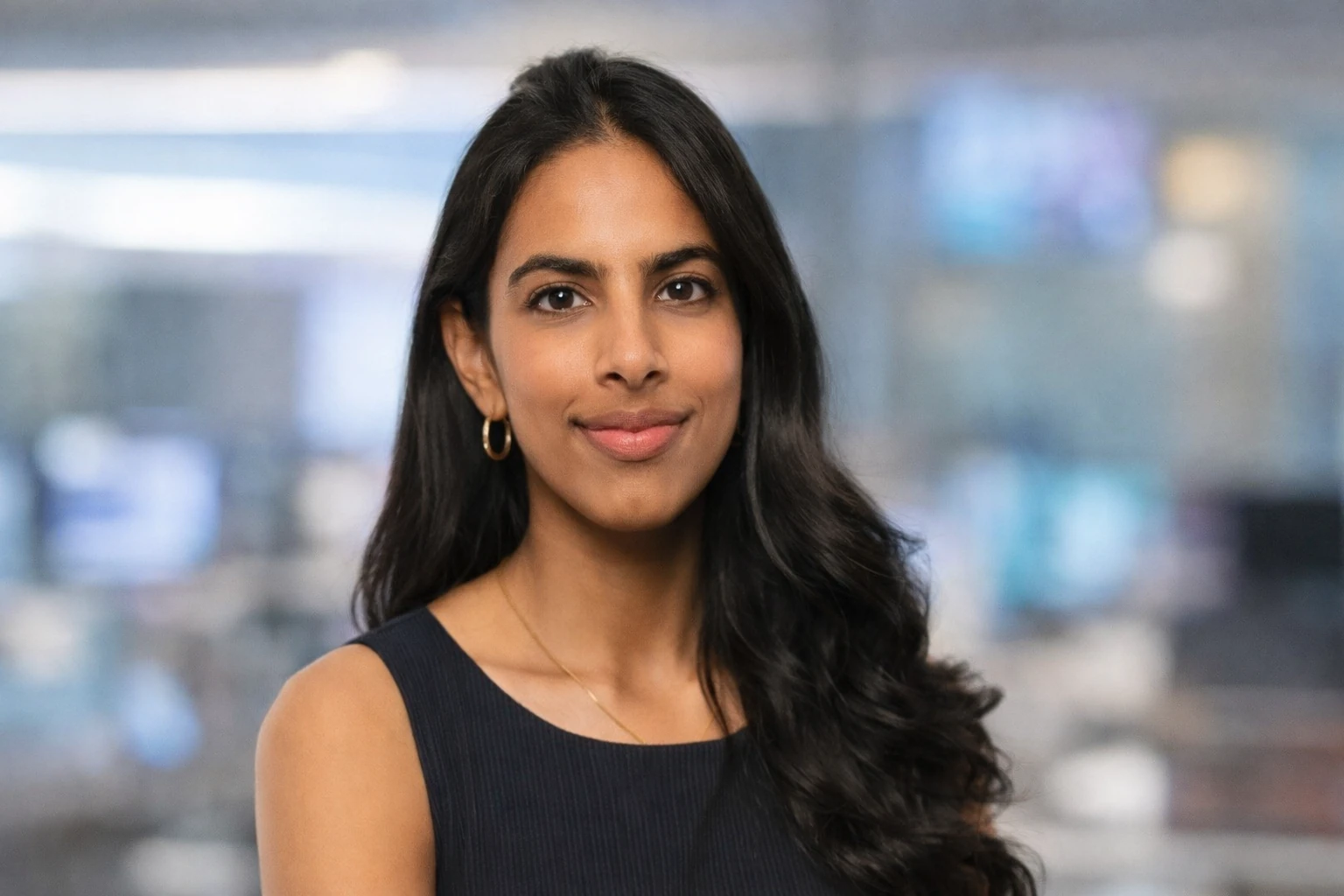
The footage is shaky, the source unclear, and the stakes impossibly high. A video begins circulating online—perhaps from a war zone, perhaps manipulated, perhaps real. Within hours, it has been shared millions of times. Before most audiences can decide what to believe, journalists like Merlyn Thomas are already at work, breaking down pixels, cross-checking locations, and consulting experts to answer a deceptively simple question: is this real?
Thomas is part of a new generation of reporters whose work exists at the intersection of journalism, technology, and global accountability. As a journalist with BBC Verify, the British broadcaster’s specialist verification unit, she has built a reputation for methodical, evidence-based reporting in a world where truth is often contested. Her name may not be instantly recognizable to casual viewers, but her work has become increasingly visible in some of the most complex and consequential news stories of recent years.
Early Life and Background
Compared with many public figures, Merlyn Thomas has kept much of her personal life out of the spotlight. Reliable public information about her early years is limited, and that absence is telling in itself. Unlike celebrities or politicians, journalists often build their careers on the work they produce rather than the personal narratives they share.
What is known comes from scattered references in professional profiles and journalism networks. Thomas is believed to have grown up in the United Kingdom, though specific details about her hometown or family background have not been widely confirmed in primary sources. This restraint reflects both personal privacy and the norms of her profession, where credibility depends less on biography and more on reporting.
The lack of publicly verified detail has led to a patchwork of claims across various websites, some suggesting aspects of her upbringing or heritage. These claims tend to repeat each other without clear sourcing, making them difficult to verify. A careful reading of available information suggests that while she is a British journalist, many specifics about her family life remain either private or undocumented in reliable records.
Education and Early Interests
There is stronger, though still not fully definitive, evidence about Thomas’s academic path. Several secondary sources state that she studied at the University of Cambridge, focusing on languages such as French and Arabic. While these details appear across multiple profiles, they are not consistently backed by direct institutional confirmation in publicly accessible records.
If accurate, that educational background would align closely with her later work. Language training often provides journalists with a broader global perspective and the ability to engage with sources and material across regions. It also fits the profile of someone working in verification journalism, where understanding international contexts and source material can be essential.
Beyond formal education, Thomas’s early interests appear to have leaned toward journalism and storytelling. References to involvement in student media suggest that she began developing reporting skills during her university years, though again, detailed records are sparse. What can be said with more confidence is that she entered journalism at a time when the profession itself was changing rapidly, shaped by the rise of social media and the increasing spread of misinformation.
Entering Journalism
Thomas’s early career reflects a path that is becoming more common for younger journalists: starting in digital-first environments and gradually moving into more specialized reporting roles. While a complete timeline of her first positions is not widely documented, her later recognition within journalism circles suggests a steady progression rather than a sudden breakthrough.
By the early 2020s, she had established herself within the BBC, working on stories that required careful analysis of online content. This was a period when newsrooms were investing more heavily in verification, driven by the realization that traditional reporting methods alone were no longer sufficient to counter false or misleading information.
Her early work appears to have focused on disinformation, particularly in areas such as climate reporting. That focus placed her at the center of a growing field, as journalists and researchers began to treat misinformation not as a side issue but as a core challenge to public understanding. It also positioned her within a network of reporters who were developing new methods for tracking and debunking false claims.
Career Breakthrough and BBC Verify
A defining moment in Thomas’s career came with her association with BBC Verify, a unit launched by the BBC to address the challenges of modern information warfare. Established in 2023, BBC Verify was designed to bring transparency to fact-checking and to show audiences how journalists reach their conclusions.
Thomas’s role within this team placed her at the forefront of a new style of reporting. Instead of simply presenting findings, BBC Verify often walks viewers through the verification process itself, using visual evidence, data analysis, and expert consultation. This approach reflects a broader shift in journalism toward openness about methods, particularly in response to declining public trust.
Her work with BBC Verify has included investigations into conflict zones, analysis of viral videos, and scrutiny of official claims. These stories often involve complex evidence, requiring collaboration with specialists in fields such as weapons analysis, satellite imaging, and digital forensics. The result is reporting that is both technical and accessible, aimed at helping audiences understand not just what happened, but how journalists know it happened.
Reporting in the Age of OSINT
Thomas’s work is closely tied to open-source intelligence, often referred to as OSINT. This approach relies on publicly available data—social media posts, satellite imagery, videos, and other digital traces—to build a picture of events. It has become an essential tool in modern journalism, particularly in situations where access on the ground is limited.
For reporters like Thomas, OSINT is both an opportunity and a challenge. It allows journalists to verify events across borders and in real time, but it also requires a high level of skepticism and technical skill. Every piece of evidence must be tested, cross-referenced, and placed in context.
Her reporting often illustrates this process. A single video clip might be analyzed frame by frame, compared with known landmarks, and matched against satellite data. Experts may be consulted to interpret details that are not immediately visible to the public. This careful approach is designed to reduce the risk of error, though it does not eliminate uncertainty entirely.
What sets Thomas apart is not just her ability to work with these tools, but her role in explaining them. BBC Verify’s model emphasizes transparency, and her reporting reflects that priority. By showing how evidence is tested, she helps audiences understand the difference between verified information and unverified claims.
Recognition and Professional Standing
Within journalism circles, Thomas has received recognition as an emerging talent. In 2023, she was shortlisted for Rising Star of the Year in the BBC News awards, an acknowledgment of her work and potential. She has also been associated with the John Schofield Trust, a UK-based organization that supports early-career journalists through mentoring and development programs.
This kind of recognition is significant, even if it does not always translate into public fame. Journalism awards and fellowships often reflect peer evaluation, offering insight into how a reporter is viewed within the profession. In Thomas’s case, they suggest that her work has been taken seriously by colleagues and industry observers.
At the same time, her profile remains relatively low compared with more traditional media figures. This is partly a function of her role. Verification journalism is often collaborative, with teams working together to analyze evidence. Individual reporters may not always be the focus, even when their contributions are substantial.
Public Image and Privacy
Thomas occupies an interesting position in the public eye. She is visible enough to be searched and recognized, yet not so prominent that her personal life has been extensively documented. This balance is increasingly rare in an era when many public figures share details of their lives online.
Her social media presence reflects a professional focus, emphasizing reporting and analysis rather than personal updates. This approach aligns with the expectations of her role, where credibility depends on objectivity and trust. It also helps maintain a boundary between her work and her private life.
Speculation about her personal relationships, family, or lifestyle appears in some corners of the internet, but these claims are often unsupported by reliable sources. As with many journalists, the most accurate picture comes from her work rather than from biographical detail.
Financial Standing and Net Worth
There is no publicly verified figure for Merlyn Thomas’s net worth. Estimates that appear online vary widely and are typically based on assumptions rather than documented financial information. As a BBC journalist, her income would likely fall within the broadcaster’s standard salary ranges for reporters, but exact figures are not disclosed.
It is worth noting that journalism, even at major organizations, does not typically produce the kind of wealth associated with entertainment or business figures. Thomas’s career appears to be driven by professional commitment rather than financial visibility.
Any discussion of her earnings should therefore be approached with caution. Without confirmed data, it is more accurate to say that her financial details remain private.
Challenges and the Nature of Her Work
Verification journalism is demanding in ways that are not always obvious. It often involves analyzing distressing material, working under time pressure, and facing scrutiny from audiences who may disagree with the findings. For reporters like Thomas, the stakes are high, as errors can have significant consequences for public understanding.
There is also the challenge of navigating contested narratives. In many of the stories she covers, different parties present conflicting accounts, each supported by selective evidence. The journalist’s task is to evaluate these claims and present a balanced, evidence-based conclusion.
This work requires both technical skill and editorial judgment. It also demands resilience, as verification reporters often face criticism from multiple sides. Despite these challenges, the field continues to grow, reflecting the increasing importance of reliable information in a complex media environment.
Where Merlyn Thomas Is Now
As of the most recent publicly available information, Merlyn Thomas continues to work with BBC Verify, contributing to coverage of global events and disinformation. Her reporting remains focused on verification and analysis, areas that are likely to become even more central to journalism in the coming years.
Her trajectory suggests a career still in development, with potential for further recognition and influence. As audiences become more aware of verification processes, reporters like Thomas may become more prominent, not just within newsrooms but in public discourse.
For now, she represents a new kind of journalist: one whose expertise lies not only in gathering information, but in proving its reliability.
Frequently Asked Questions
Who is Merlyn Thomas?
Merlyn Thomas is a British journalist associated with BBC Verify, the BBC’s specialist unit focused on fact-checking and verification. She is known for reporting on disinformation, social media, and open-source investigations.
Her work often involves analyzing digital evidence and verifying claims in complex news situations. This places her within a growing field of journalism that prioritizes transparency and accuracy.
What does Merlyn Thomas do?
She works as a reporter focusing on verification and disinformation. Her role involves examining videos, images, and online content to determine whether they are authentic and accurate.
This type of reporting often includes collaboration with experts and the use of technical tools. It is designed to help audiences understand what is true in a fast-moving information environment.
Where does Merlyn Thomas work?
Merlyn Thomas works for the BBC, specifically within the BBC Verify team. This unit was launched to address misinformation and to provide clear, evidence-based reporting.
Her work appears across BBC platforms, including television and online articles. It often accompanies major global news stories.
What is BBC Verify?
BBC Verify is a specialized journalism unit focused on fact-checking and verification. It uses techniques such as data analysis, satellite imagery, and expert consultation to assess claims.
The unit aims to increase transparency by showing how journalists verify information. It reflects a broader shift in media toward evidence-based reporting.
Is Merlyn Thomas married?
There is no publicly confirmed information about her marital status. Details about her personal relationships have not been widely documented in reliable sources.
Like many journalists, she appears to keep her private life separate from her professional work. This helps maintain focus on her reporting.
What is Merlyn Thomas’s net worth?
There is no verified public figure for her net worth. Estimates found online are speculative and not based on confirmed data.
As a BBC journalist, her income would likely align with industry standards, but exact figures are not disclosed. Financial details remain private.
Conclusion
Merlyn Thomas represents a shift in what it means to be a journalist. Her work is rooted in verification, a field that has become essential as misinformation spreads more easily than ever. Rather than relying on authority alone, she helps show audiences how facts are established.
Her career also highlights the quiet professionalism that defines much of modern journalism. Without the trappings of celebrity, she has built a reputation through careful, methodical reporting. That approach may not always attract headlines, but it forms the backbone of trustworthy news.
As the media landscape continues to evolve, reporters like Thomas are likely to play an increasingly visible role. Their work answers a basic but urgent need: helping people understand what is real.
And that may be the clearest measure of her significance. In a world full of noise, she is part of the effort to bring clarity.
