

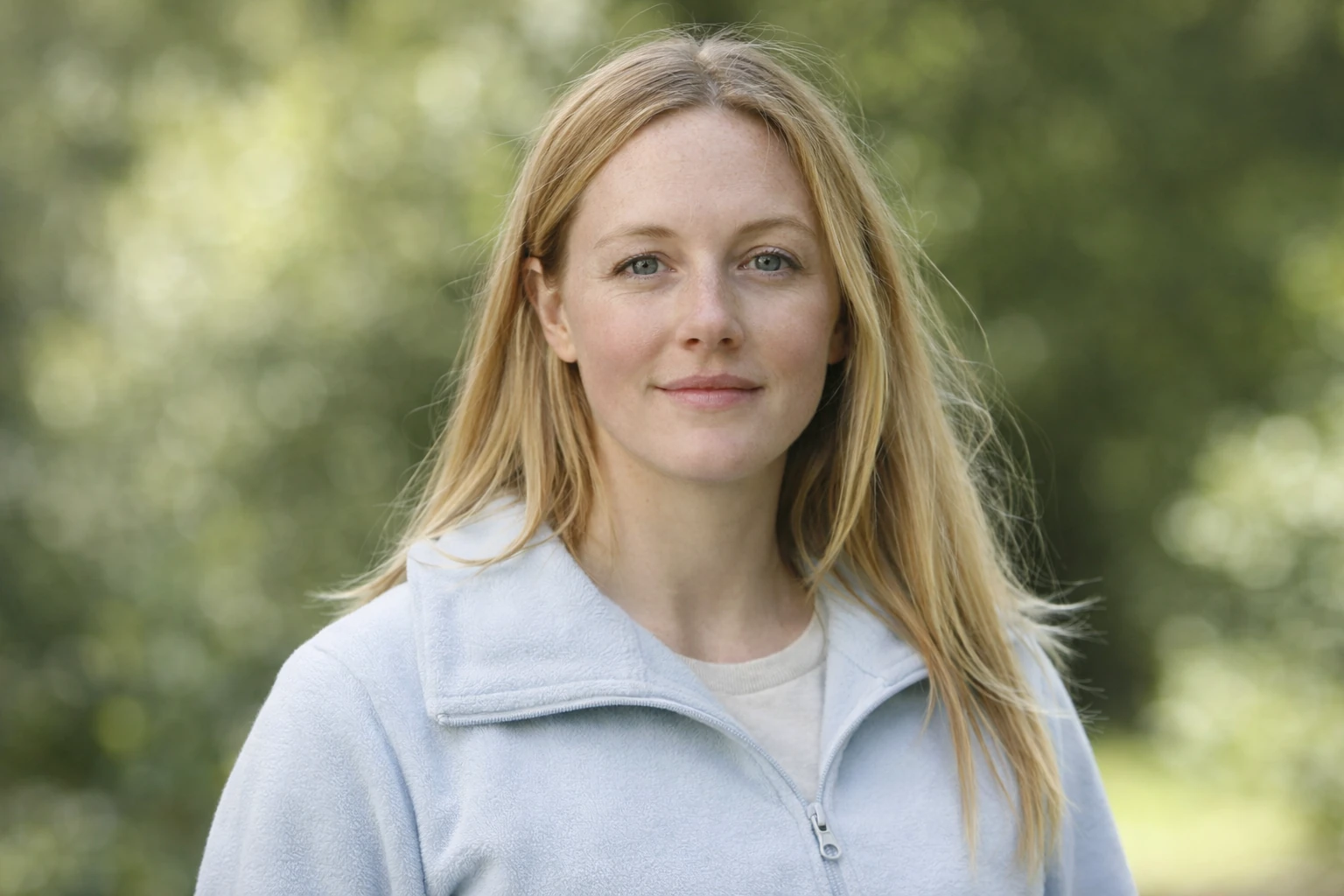
That fact changed the way her life would be seen forever. A DNA test in 1991 confirmed that her father was Mark Phillips, the Olympic gold medalist and former husband of Princess Anne. She didn’t step into the spotlight; the spotlight shifted toward her. What followed wasn’t a public career, but a quiet existence shaped by a connection she never chose.
Early Life and Family Background
Felicity Tonkin was born in August 1985 in New Zealand, a country far removed from the rituals and routines of British royal life. Her mother, Heather Tonkin, has been described in public records as an art teacher, suggesting a creative and grounded household. By all accounts, Felicity grew up in a setting that valued normalcy rather than notoriety, a childhood shaped more by local community than global headlines.
The New Zealand environment likely offered something rare for someone with even a distant royal connection: anonymity. Life there would have centered around school, family gatherings, and the rhythms of everyday living rather than photographers or press speculation. That distance matters, because it meant Felicity’s early years unfolded without the constant scrutiny that defined the lives of her half-siblings in Britain.
Family records from New Zealand, including public notices, confirm the Tonkin family’s presence and roots in the country. These small, verifiable details help paint a picture that is often missing from online summaries. Instead of a dramatic origin story, what emerges is something far more ordinary—a childhood that looked, in many ways, like anyone else’s.
The Paternity Revelation That Changed Everything
For the first six years of her life, Felicity Tonkin was not a public figure. That changed in 1991, when a DNA test confirmed that Mark Phillips was her father. Phillips was already a well-known figure, both for his Olympic achievements and his previous marriage to Princess Anne, which had placed him firmly in the public eye.
The timing of this revelation was significant. Princess Anne and Mark Phillips had announced their separation in 1989, and their marriage was still under public discussion when the paternity news emerged. That overlap turned what might have been a private matter into a widely reported story, placing Felicity’s name in headlines she had no control over.
What’s striking is how quickly her identity became framed through that single connection. She wasn’t introduced to the world as a child with her own life and future. Instead, she was described in relation to a man and, by extension, to a royal family. That framing has followed her ever since, shaping how people search for her and how her story is told.
Growing Up Outside the Royal Spotlight
While her half-siblings Peter Phillips and Zara Tindall grew up under the watchful eye of the British press, Felicity Tonkin’s upbringing unfolded in a completely different environment. She did not attend royal events, appear in official photographs, or participate in the structured public life associated with the monarchy. Her world was smaller, quieter, and far more private.
Anyone who has observed royal coverage knows how relentless it can be. Even minor appearances are dissected, and personal milestones become public property. Felicity avoided that entirely, not because of strategy, but because of geography and circumstance. Living in New Zealand created a natural buffer between her and the media storm that often surrounds the royal family.
That separation likely shaped her identity in ways that are hard to measure. While her half-siblings navigated public expectations, she was free to define herself without those pressures. The truth is, very little is publicly documented about her education or early ambitions, and that absence speaks volumes about the life she was able to lead.
Career and Adult Life
One of the most persistent questions about Felicity Tonkin is what she chose to do as an adult. The honest answer is that reliable information is limited. Several modern biography sites claim she built a professional life in New Zealand, possibly in a business or creative field, but these claims often lack clear sourcing.
That said, the broader picture suggests a deliberate choice to remain private. Unlike many individuals with even a loose connection to fame, Tonkin has not pursued public-facing opportunities tied to her background. There are no confirmed interviews, public speaking engagements, or media projects that would place her in the spotlight.
What’s surprising is how consistent that privacy has been. Over the years, there have been countless opportunities for her to step forward, clarify her story, or even capitalize on public interest. She hasn’t taken them, at least not in any documented way. That decision has helped preserve a boundary that is increasingly rare in the digital age.
Relationship with Mark Phillips and Extended Family
Mark Phillips’ role in Felicity Tonkin’s life has been the subject of speculation, but publicly confirmed details remain scarce. The DNA test established paternity, but it did not automatically define the nature of their relationship. Like many family situations that become public unexpectedly, the emotional reality is likely more complex than headlines suggest.
Phillips himself is best known for his achievements in equestrian sport, including winning team gold at the 1972 Munich Olympics. His career brought him recognition long before his marriage to Princess Anne, and he continued to be a respected figure in the sport even after their divorce. That background adds another layer to the story, placing Felicity within a family that spans both sporting excellence and royal association.
As for her half-siblings, Peter Phillips and Zara Tindall, there is little verified information about personal interactions. Publicly, there have been no widely documented appearances or statements that would clarify the nature of their relationship. That silence has left room for speculation, but it also reinforces the idea that much of this family dynamic remains private.
Personal Life and Relationships
If there is one area where misinformation spreads quickly, it’s in the details of Felicity Tonkin’s personal life. Many online profiles attempt to fill in gaps with claims about marriage, children, and daily life, yet few provide credible sources. The truth is that her marital status and family life have not been publicly confirmed.
That absence of detail can feel unusual, especially in an era where personal milestones are often shared online. But it also suggests a consistent approach to privacy. By not engaging with public platforms or media narratives, Tonkin has maintained control over what remains known and what does not.
Friends and acquaintances, if they were to speak, would likely describe a life that is grounded and ordinary. There is no evidence of the kind of high-profile social circles or public events that often accompany even distant celebrity connections. Instead, her story seems to be one of choosing a quieter path, even when a louder one was available.
Financial Standing and Net Worth in 2026
Estimating Felicity Tonkin’s net worth is difficult, largely because there is no verified public financial data. Some websites assign specific figures, but these numbers often appear without supporting evidence. In reality, her financial standing is not publicly documented, and any estimate should be treated with caution.
What can be said is that her connection to Mark Phillips does not automatically translate into inherited wealth or public financial visibility. Phillips himself built his career through equestrian sport, training, and related ventures, rather than through royal funding. That distinction matters, because it separates the idea of royal association from actual financial entitlement.
The broader takeaway is that Felicity Tonkin’s life has not been defined by visible displays of wealth. There are no public records of major business ventures, property portfolios, or high-profile investments tied to her name. Her financial story, like much of her life, remains largely private.
Life Today and Current Whereabouts
As of 2026, Felicity Tonkin is believed to still reside in New Zealand, continuing to live outside the public eye. There have been no confirmed recent interviews or appearances that would provide a detailed update on her life. That continuity is striking, given how much the media landscape has changed since the early 1990s.
Here’s where it gets interesting. In an age where even the most private individuals can be tracked through social media or public records, Tonkin has managed to maintain a remarkably low profile. That suggests a deliberate effort to stay out of the spotlight, rather than a simple lack of opportunity.
Her current life, while largely undocumented, appears to reflect the same values that shaped her upbringing. Privacy, stability, and a focus on personal rather than public identity seem to define her path. It’s a choice that stands out precisely because it runs counter to the expectations placed on people with even a hint of fame.
Lesser-Known Details That Add Context
Not many people know this, but Felicity Tonkin’s story also highlights how quickly public narratives can form around limited information. Within a few years of the 1991 paternity confirmation, her name had become shorthand for a much larger story about royal relationships and personal lives. That shift happened without her participation, showing how little control individuals sometimes have over their public image.
Another detail that often gets overlooked is the geographic distance that shaped her experience. Growing up in New Zealand placed her thousands of miles away from the British media, which likely reduced the intensity of coverage she faced. That distance created a buffer that allowed her to develop independently of the royal narrative.
There’s also the fact that her connection to the royal family is indirect, tied through her father’s previous marriage rather than through lineage or title. That distinction is often blurred in headlines, but it matters when understanding her actual place within that world. She exists on the edge of that story, not at its center.
Finally, her continued absence from public life is itself a defining feature. In an era where many people seek visibility, Tonkin’s decision to remain private has become part of her identity. It’s not something she has announced or explained, but it’s evident in the record—or lack of one—that exists.
Frequently Asked Questions
Who is Felicity Tonkin?
Felicity Tonkin is the daughter of Mark Phillips and Heather Tonkin, born in New Zealand in August 1985. She became publicly known after a DNA test in 1991 confirmed Phillips’ paternity. Her connection to the British royal family comes through Phillips’ former marriage to Princess Anne.
How is she related to the royal family?
She is the half-sister of Peter Phillips and Zara Tindall, both children of Princess Anne and Mark Phillips. While this connection places her near the royal family, she does not hold a title or a formal role. Her relationship is biological rather than institutional.
What does Felicity Tonkin do for a living?
There is no widely verified public record of her profession. Some sources suggest she has pursued a career in New Zealand, but these claims are not consistently supported by reliable documentation. The most accurate description is that she has lived a private life outside public view.
Is Felicity Tonkin married?
Her marital status has not been publicly confirmed. Various online sources make claims about her personal relationships, but these often lack credible evidence. Without verified information, it is best to treat these details as unconfirmed.
Where is Felicity Tonkin now?
She is believed to be living in New Zealand as of 2026. There have been no recent public appearances or statements that would provide more specific details. Her current life appears to remain private and largely undocumented.
Conclusion
Felicity Tonkin’s story is not the kind that fits neatly into a headline. It doesn’t offer dramatic arcs or public reinvention. Instead, it presents something quieter and, in its own way, more revealing. A life shaped by a moment of public attention, followed by decades of deliberate privacy.
What stands out is not what we know, but how little we do. In an age where information is often abundant and immediate, her story resists that pattern. The verified facts are clear, but the spaces between them remain largely untouched, and that absence has become part of the narrative.
There’s also a broader lesson here about how we consume stories tied to fame. Not every connection to a well-known family leads to a public life. Sometimes it leads to the opposite—a conscious step away from attention, even when attention is guaranteed.
As time goes on, the curiosity around Felicity Tonkin may continue, driven by the enduring fascination with royal connections. But her life, as it appears from the outside, suggests a different kind of success. One defined not by visibility, but by the ability to live on one’s own terms, even when the world is watching from a distance.
Meta description: Felicity Tonkin biography: her early life, royal connection, career, and the truth behind Mark Phillips’ daughter in 2026.
