

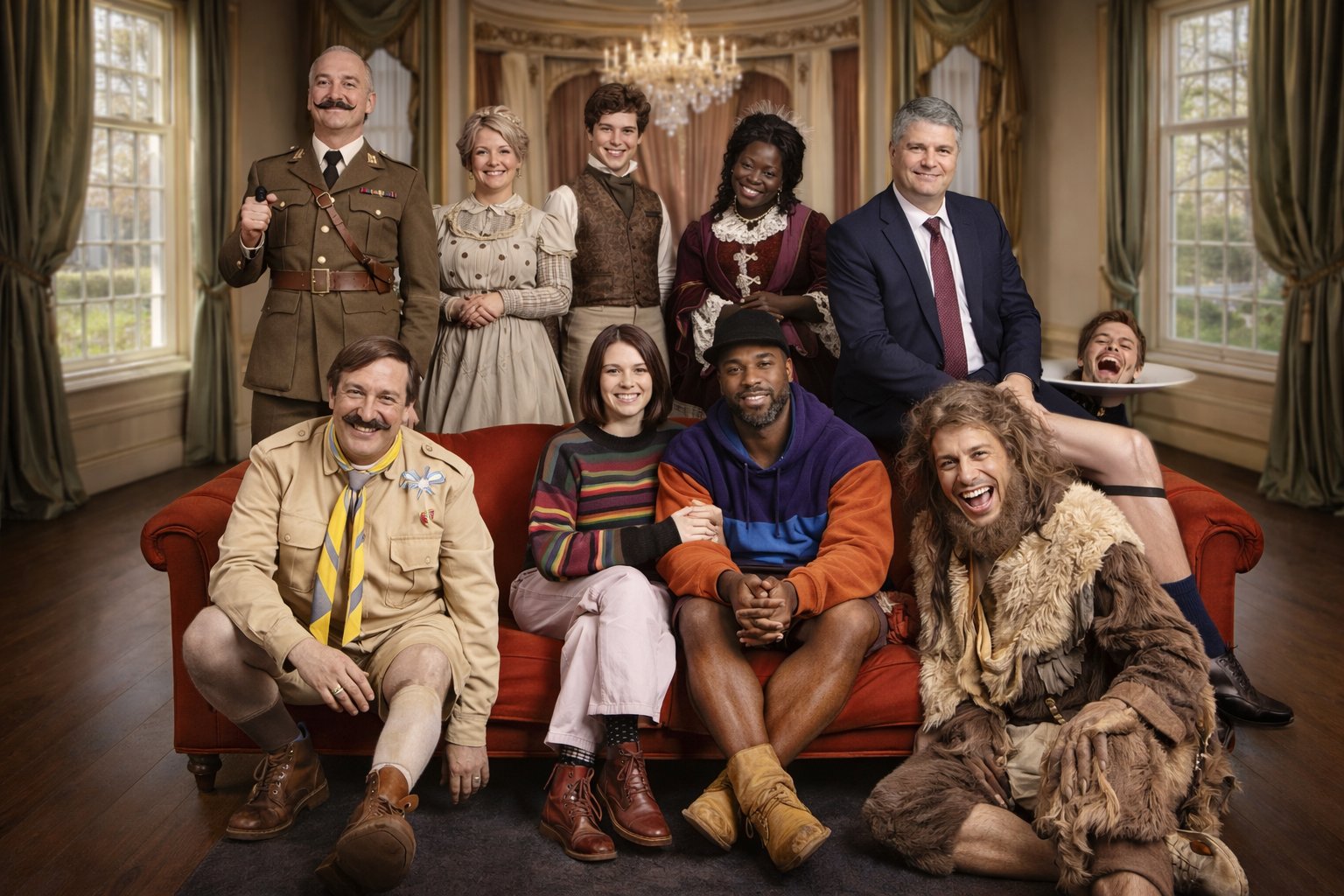
Kevin Corbishley’s name rarely appeared on screen while he was alive. He wasn’t a face audiences recognized, nor a name that trended with casting announcements or awards coverage. But in early 2022, viewers of two widely loved British television series—Call the Midwife and Ghosts—paused at the closing credits when a quiet tribute appeared: a dedication to Corbishley, described not as a star, but as a friend. For many, it was the first time they had encountered his name. For the people who worked alongside him, it marked the absence of someone who had been essential to the work itself.
That moment—simple, understated, and public—captured something that television often hides. Behind the actors, scripts, and camera framing lies a network of skilled professionals whose contributions rarely make headlines. Kevin Corbishley was one of them. His career, though not extensively documented in public records, reflects the kind of steady, technical expertise that keeps productions running. His story is not one of fame but of craft, collaboration, and respect within the industry.
Early Life and Background
The public record on Kevin Corbishley’s early life is limited, and that limitation is worth acknowledging at the outset. There are no widely available interviews, no detailed profiles from major publications, and no confirmed information about his childhood, education, or family background. What can be pieced together suggests a life lived largely outside the spotlight, even as his professional work supported productions seen by millions.
Some sources refer to him by the nickname “Kev,” which appears in screen credits and memorial references. That detail, small as it is, hints at how colleagues knew him: informally, personally, as part of a working team rather than a distant figure. But beyond that, specifics about where he grew up, what led him into the film and television industry, or how he trained remain unconfirmed in reliable public documentation.
This absence is not unusual for crew members in television and film. Unlike actors or directors, whose biographies are often carefully recorded, technical professionals frequently leave behind only their credits and the memories of those they worked with. In Corbishley’s case, those credits offer the clearest insight into his career.
Entering the Film and Television Industry
Kevin Corbishley’s documented work begins in the early 2010s, with a credit on the 2012 film Anna Karenina, directed by Joe Wright. He is listed in the art department, a role that typically involves supporting the visual design of a production, from set construction to the physical details that bring a period setting to life. The film itself was a major production, known for its stylized staging and theatrical presentation, and working on such a project would have required coordination, technical skill, and adaptability.
This early credit suggests that Corbishley entered the industry through hands-on, practical work rather than through a public-facing role. Many crew members follow similar paths, moving between departments or specializing over time as they gain experience. While the details of his transition are not documented, his later credits indicate a shift toward rigging and camera-related work, areas that demand both precision and a strong understanding of on-set logistics.
By the late 2010s, Corbishley was working in roles described as “standby rigger” or “rigger,” positions that are central to the physical setup of a production. These roles often involve preparing and maintaining equipment, ensuring safety standards are met, and responding quickly to the changing needs of a shoot. It is work that must be reliable, efficient, and largely invisible to the final audience.
Career Work: From Film to Television
Corbishley’s credited projects, while not numerous in public databases, are notable for their quality and reach. In addition to Anna Karenina, he is credited on the 2019 television film Responsible Child, a critically regarded BBC production that explored the real-life case of a young boy tried for murder. His role as a standby rigger placed him within the technical team responsible for maintaining the visual and structural integrity of the set during filming.
His work on Call the Midwife represents one of his most sustained contributions. IMDb records list him as a standby rigger across multiple episodes between 2020 and 2022. The series, known for its detailed period setting and emotionally driven storytelling, relies heavily on consistent production quality. Lighting, camera positioning, and physical set arrangements must support both historical authenticity and intimate character moments, and crew members in Corbishley’s role help ensure that balance is maintained.
He also worked on the BBC comedy Ghosts, a series that blends humor with a distinctive visual style rooted in its historic house setting. Corbishley is credited as a rigger on the show during 2021 and 2022. The production’s mix of indoor and outdoor scenes, combined with its ensemble cast and physical comedy elements, would have required careful coordination behind the scenes.
Taken together, these credits paint a picture of a working professional who contributed to a range of projects across genres, from literary adaptation to social drama to comedy. His career may not have been defined by high-profile recognition, but it was clearly embedded in productions that reached wide audiences and maintained strong reputations.
Understanding His Role on Set
To understand Kevin Corbishley’s career, it helps to look closely at what a rigger or standby rigger actually does. These roles sit at the intersection of several departments, including camera, lighting, and set construction. A rigger is responsible for setting up the physical infrastructure that supports filming, from mounting lighting equipment to ensuring that structures are secure and safe.
A standby rigger, as the title suggests, remains on hand during filming to address any issues that arise. This might include adjusting equipment, troubleshooting technical problems, or adapting setups as scenes change. The work requires both technical knowledge and the ability to respond quickly under pressure, often without disrupting the flow of production.
What’s striking about this kind of work is how essential it is to the final product, even though it is rarely acknowledged publicly. Viewers notice when something goes wrong—a shadow out of place, a camera movement that feels off—but they rarely think about the people who prevent those problems from happening. Corbishley’s role placed him firmly in that category: a professional whose success was measured by the smoothness of the production rather than by visible credit.
The Call the Midwife Tribute
The first widely recognized public acknowledgment of Kevin Corbishley came with the Call the Midwife series 11 finale, which aired in February 2022. At the end of the episode, a dedication appeared in his memory, prompting viewers to search for his name and learn more about who he was.
The tribute indicated that Corbishley had been part of the production team and that his death had occurred before the episode’s broadcast. While some sources suggest specific dates, there is inconsistency in the publicly available information, and no widely confirmed primary source provides a definitive timeline. That uncertainty has led to confusion across online articles, many of which repeat unverified details.
What is clear is that the production chose to honor him in a visible way. For a long-running series like Call the Midwife, which has built a strong sense of continuity and community among its cast and crew, such a tribute carries weight. It reflects not only professional contribution but also personal connection.
The Ghosts Dedication
Later in 2022, Ghosts followed with its own tribute to Kevin Corbishley in the first episode of its fourth series, titled “Happy Holiday.” The dedication once again appeared at the end of the episode, and for many viewers, it was the second time they had encountered his name.
The wording of the tribute, which described him as a friend, offered a glimpse into how he was regarded by those who worked with him. It suggested a level of familiarity and respect that goes beyond formal recognition. In an industry where productions can be fast-paced and demanding, such acknowledgments often speak to the relationships formed behind the scenes.
The dual tributes—from two separate productions—reinforced the sense that Corbishley had been a valued member of the television community. They also expanded the audience awareness of his work, connecting viewers from different shows through a shared moment of recognition.
Personal Life and Privacy
One of the defining aspects of Kevin Corbishley’s story is how little is publicly known about his personal life. There are no confirmed details about his family, relationships, or day-to-day life outside of work. This absence should not be mistaken for a lack of substance; rather, it reflects the reality that many industry professionals maintain private lives that are not documented in media coverage.
In an era where personal information is often readily accessible, Corbishley’s relative anonymity stands out. It underscores the difference between public figures and the many individuals who contribute to public-facing work without becoming public figures themselves.
This privacy also shapes how his story can be told. Without reliable information, it would be inappropriate to speculate about his background or personal circumstances. The focus remains on what can be confirmed: his professional contributions and the respect he earned from colleagues.
Public Recognition and Legacy
Kevin Corbishley did not receive awards or public honors in the traditional sense. His recognition came through the work itself and through the tributes that followed his passing. For many crew members, this is often the case. Their legacy is tied to the productions they helped create and to the memories held by those who worked with them.
The fact that his name continues to be searched and discussed speaks to the impact of those tributes. They prompted viewers to look beyond the surface of television and consider the people who make it possible. In that sense, Corbishley’s legacy extends beyond his individual contributions to a broader awareness of the collaborative nature of filmmaking.
There is also a quiet dignity in the way his story has unfolded publicly. Without sensational headlines or extensive biography, his name is associated primarily with work and with the respect of his peers. That combination offers a different kind of recognition, one that is grounded in craft rather than celebrity.
Financial Standing and Net Worth
There is no publicly verified information about Kevin Corbishley’s net worth, income, or financial status. As a crew member working in technical roles, his earnings would have been based on industry rates for his positions, which can vary depending on the production, experience level, and union agreements.
Any figures that appear online are speculative and should be treated with caution. Unlike actors or high-profile directors, crew members’ financial details are rarely disclosed publicly. The absence of such information is consistent with the overall lack of personal data available about Corbishley.
Influence Within the Industry
While Kevin Corbishley may not have been widely known outside the productions he worked on, his influence can be understood through the roles he held and the projects he contributed to. Working on shows like Call the Midwife and Ghosts requires a level of trust and competence that is built over time.
Crew members who return to multiple episodes or series are often those who have proven their reliability and skill. Corbishley’s repeated involvement in such productions suggests that he was valued within his field, even if that value was not publicly documented in detail.
There is also an implicit acknowledgment in the tributes themselves. Productions do not typically include memorial cards without reason. The decision to do so reflects the significance of the individual to the team, both professionally and personally.
Where Kevin Corbishley Is Now
Kevin Corbishley passed away before the broadcast of the tribute episodes that honored him. While the exact details of his death remain unclear in publicly available sources, his absence has been marked by the productions he contributed to.
His presence continues through his work, which remains part of the shows and films he helped create. Each time those productions are watched, the technical craftsmanship he supported is still there, even if his name is not immediately visible.
For viewers who noticed the tribute cards and searched for his story, that connection remains. It is a reminder that behind every finished episode or film lies the work of many individuals, each contributing in ways that may not be immediately seen.
Frequently Asked Questions
Who was Kevin Corbishley?
Kevin Corbishley was a British film and television crew member known for his work in rigging and camera-related departments. He contributed to productions including Ghosts, Call the Midwife, Responsible Child, and Anna Karenina. His name became widely recognized after tribute cards appeared in his memory on television.
Was Kevin Corbishley an actor?
No, Kevin Corbishley was not an actor. He worked behind the scenes in technical roles that supported the production process. His contributions were part of the infrastructure that allows filming to take place smoothly and safely.
What did Kevin Corbishley do on Ghosts?
On Ghosts, Kevin Corbishley worked as a rigger. This role involves setting up and maintaining equipment used in filming, including lighting and camera supports. His work helped ensure that the production ran efficiently.
Why was Kevin Corbishley honored on Call the Midwife?
Kevin Corbishley was honored on Call the Midwife because he was a member of the production crew who passed away before the episode aired. The tribute reflected the respect and appreciation of his colleagues for his work and presence on the show.
When did Kevin Corbishley die?
The exact date of Kevin Corbishley’s death is not clearly confirmed in widely available public sources. Tribute cards indicate that he had passed away before early 2022, but conflicting information exists regarding the specific year.
What is known about Kevin Corbishley’s personal life?
Very little is publicly known about his personal life, including details about his family or background. He maintained a private life, and most available information focuses on his professional contributions.
Conclusion
Kevin Corbishley’s story is not one of fame, but of work. He built a career in the technical side of film and television, contributing to productions that reached wide audiences without ever stepping into the spotlight himself. His credits may be brief, but they reflect years of effort, skill, and collaboration.
What stands out most is how he was remembered. The tributes from Call the Midwife and Ghosts speak to a person who mattered to those around him. They suggest a presence that was felt on set, not just through the tasks he performed but through the relationships he formed.
There is a tendency to measure success by visibility, by how often a name appears in headlines or awards lists. Corbishley’s life offers a different perspective. His impact was real, even if it was not widely documented, and his work continues to exist in the shows and films he helped bring to life.
