

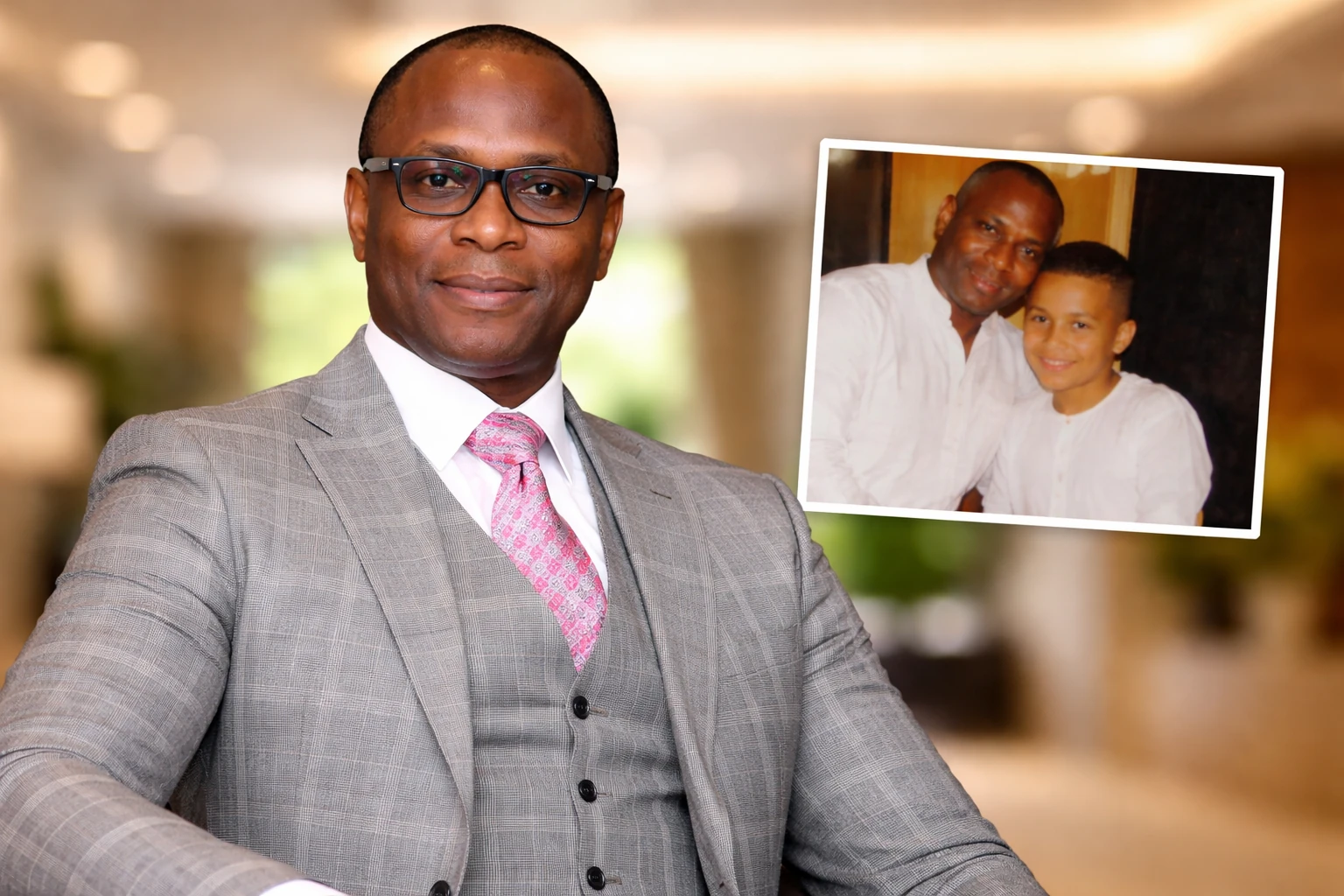
Kehinde Alli’s name surfaces in public conversation only at certain moments—usually when his son, the footballer Dele Alli, becomes the subject of renewed attention. It is a peculiar kind of visibility, one defined less by personal achievement than by proximity to a story that has unfolded on the world stage. For many readers, Kehinde Alli is a figure glimpsed through fragments: a father in the background of a famous athlete’s life, a man associated with Nigeria, and a presence tied to a childhood that Dele Alli has described as complicated and painful. What is harder to find is a clear, fully documented portrait of Kehinde himself.
That absence shapes the way his biography must be told. Unlike celebrities whose lives are recorded in interviews, awards, and public appearances, Kehinde Alli occupies a quieter space. His story exists partly in official records, partly in the recollections of others, and partly in the gaps between what is known and what is assumed. To understand him, you have to piece together those elements carefully, resisting the temptation to fill in what cannot be confirmed.
Early Life and Nigerian Background
Publicly available information consistently identifies Kehinde Alli as Nigerian, though the details of his early life remain limited. His name itself offers a clue rooted in Yoruba culture, where “Kehinde” is traditionally given to the second-born of twins. That cultural marker has fueled repeated claims that he has a twin brother named Taiwo, though the strength of that connection depends largely on indirect evidence rather than direct confirmation.
What can be said with more confidence is that Kehinde Alli’s formative years unfolded in Nigeria, a country whose social and economic conditions in the late twentieth century shaped many of its emigrants. During that period, it was common for individuals to move between Nigeria and the United Kingdom in search of education or business opportunities. Kehinde Alli appears to have been part of that broader pattern, with later records linking him to Milton Keynes, a town in England that would also become central to his son’s early life.
But here’s the thing: beyond these broad outlines, there is no detailed public account of his childhood, schooling, or early ambitions. Unlike public figures who document their rise, Kehinde Alli’s early years remain largely private. That absence is not unusual, but it does set limits on how far any biography can responsibly go.
Move to the United Kingdom
At some point, Kehinde Alli established a presence in the United Kingdom, specifically in Milton Keynes. The town, located north of London, grew rapidly in the late twentieth century and attracted a diverse population, including immigrants seeking work and stability. It is in this setting that the most concrete traces of Kehinde Alli’s public record begin to appear.
Official filings from Companies House, the UK’s registrar of companies, list a “Kehinde Alli” as an officer of a company called Twintech Services Limited. The records show that he served as both a director and secretary between September 2000 and July 2001. These filings also identify him as Nigerian, aligning with other references to his background.
What’s surprising is how limited those records are despite their official status. They confirm that he was involved in a business venture, but they do not provide a detailed picture of his profession or financial standing. The company itself was short-lived, and there is no clear evidence linking it to a broader corporate career. That has not stopped many online profiles from assigning him a range of occupations, from engineer to property investor, though such claims are often unsupported by primary documentation.
Relationship with Denise Alli and Family Life
Kehinde Alli’s most widely discussed relationship is with Denise Alli, the mother of Dele Alli. Denise, who has roots in England, raised Dele during his early years in Milton Keynes. The relationship between Kehinde and Denise is believed to have ended when Dele was still very young, though the specifics of their partnership and separation have not been fully documented in public records.
Dele Alli was born on April 11, 1996, in Milton Keynes, and his early childhood unfolded in an environment marked by instability. Denise Alli has spoken in past reports about struggles that affected the family, and Dele himself has described a childhood that included periods of neglect and disruption. Kehinde Alli’s role during those early years appears to have been limited, with Dele spending most of his time in England rather than Nigeria.
That said, the family story is not one that can be reduced to simple labels. Relationships, especially those formed across continents and under pressure, rarely fit into neat categories. While Dele Alli has spoken openly about the difficulties he faced, Kehinde Alli has not offered a public account of his perspective, leaving the narrative largely one-sided.
Dele Alli’s Childhood and Time in Nigeria
One of the defining episodes in Dele Alli’s early life—and by extension in public perceptions of Kehinde Alli—was his time in Nigeria. As Dele has recounted in interviews, he was sent to live with his father during his childhood, with the intention of learning discipline and structure. The move marked a sharp transition from life in England to a very different environment.
Dele has described that period as deeply challenging, recalling cultural differences, stricter expectations, and a sense of isolation. He has said that the experience was not one he wanted, and that it contributed to the emotional struggles he later faced. These reflections, shared in interviews including his widely discussed conversation with Gary Neville in 2023, provide the clearest insight into how he experienced that chapter of his life.
But here’s where caution matters. Those accounts, while powerful, represent Dele’s perspective. They do not offer a full picture of Kehinde Alli’s intentions or circumstances at the time. Without corroborating accounts from Kehinde himself, any attempt to reconstruct the complete story must acknowledge that it is incomplete.
Adoption by the Hickford Family
At the age of 12, Dele Alli’s life took a decisive turn when he moved in with the family of Alan and Sally Hickford in Milton Keynes. The Hickfords, who were connected to Dele through youth football, became his guardians and provided the stability that had been missing from his earlier years. Dele has often spoken about the importance of that support, describing it as a turning point in his development both as a person and as a player.
This transition effectively marked the end of Dele’s direct upbringing by his biological parents, including Kehinde Alli. From that point on, his path was shaped largely by the Hickford family and by his growing commitment to football. The distance between Dele and his father became more pronounced, both geographically and emotionally.
For Kehinde Alli, this shift meant that his role in his son’s life became even less visible. There are no widely reported public interactions between the two during Dele’s rise through the ranks of English football, and their relationship appears to have remained distant.
The 2016 Name Change and Public Attention
In 2016, Dele Alli made a decision that brought his family background into global focus. He announced that he would wear only “Dele” on the back of his shirt, rather than his surname. The move was widely interpreted as a statement about his identity and his relationship with his biological family.
Dele explained that he wanted to represent himself as an individual and that he did not feel a strong connection to the Alli surname. The decision sparked widespread media coverage and prompted renewed interest in his family, including his father. For many people, it was the first time they had heard the name Kehinde Alli.
The moment illustrates how public identity can intersect with private history. A footballer’s shirt name, seen by millions, became a way of signaling personal boundaries. For Kehinde Alli, it meant being drawn into public discussion without offering his own voice in response.
Career Claims and Public Record
One of the most confusing aspects of Kehinde Alli’s biography is the wide range of career claims attached to his name. Online sources have described him as an engineer, a businessman, a property investor, and even a member of a wealthy or noble family. Yet few of these claims are backed by verifiable evidence.
The only concrete documentation comes from the Companies House records mentioned earlier. These show that a man with his name held roles in a small company for less than a year. While that indicates some involvement in business, it does not support broader claims of significant wealth or influence.
The truth is that Kehinde Alli’s professional life remains largely undocumented in the public domain. This does not mean he lacked a career or achievements, only that they have not been widely recorded or verified. For readers, it serves as a reminder to treat unverified claims with caution, especially when they appear repeatedly without clear sourcing.
Public Image and Media Portrayal
Kehinde Alli’s public image has been shaped almost entirely by his association with his son. He is often described in relation to Dele’s upbringing, particularly in discussions of the challenges the footballer faced. This framing can be reductive, reducing a complex individual to a single role within another person’s story.
At the same time, the lack of direct public statements from Kehinde Alli means that this portrayal goes largely unchallenged. In an era where many figures use social media or interviews to shape their narratives, his absence from public discourse stands out. It suggests either a deliberate choice to remain private or a lack of access to platforms where his voice could be heard.
What’s clear is that public perception is not always a full reflection of reality. Without direct input from Kehinde Alli, the picture remains incomplete, shaped by external accounts rather than firsthand testimony.
Financial Standing and Net Worth
Questions about Kehinde Alli’s wealth are common, but reliable answers are scarce. Various websites have published estimates of his net worth, often presenting them as fact. These figures vary widely and are rarely supported by credible financial disclosures or reporting.
Given the limited evidence of his business activities, any precise estimate of his net worth should be treated with skepticism. Unlike public figures who disclose earnings or hold visible assets, Kehinde Alli’s financial position is not part of the public record in any meaningful way.
That does not mean he lacked financial resources, only that they have not been documented in a way that allows for accurate assessment. For readers, the safest conclusion is that his net worth remains unknown.
Relationship with Dele Alli in Adulthood
As Dele Alli’s career progressed, his relationship with his father remained largely out of the spotlight. There have been no widely reported reconciliations or public disputes in recent years, and both men appear to have maintained their distance from each other.
Dele’s 2023 interview, in which he spoke candidly about his childhood, reinforced the impression of a strained relationship. He referred to his father in a way that emphasized emotional distance, focusing more on his own experiences than on any ongoing connection.
Without further public statements from either side, it is difficult to assess the current state of their relationship. What can be said is that it has not been a central part of Dele’s public life in adulthood, suggesting that the distance established in his youth has largely persisted.
Where Kehinde Alli Is Now
Information about Kehinde Alli’s current life is limited. He is believed to maintain ties to Nigeria, though the extent of his presence there or in the United Kingdom is not clearly documented. Unlike his son, whose career is tracked in detail by clubs and media outlets, Kehinde Alli’s movements are not part of the public record.
This lack of visibility may reflect a preference for privacy. Not everyone connected to a public figure seeks or welcomes attention, and Kehinde Alli’s low profile suggests a life lived largely outside the spotlight. For readers searching for updates, the reality is that there are no confirmed recent developments that significantly change the known picture.
Frequently Asked Questions
Who is Kehinde Alli?
Kehinde Alli is best known as the biological father of English footballer Dele Alli. He is Nigerian and has been linked to both Nigeria and the United Kingdom. Beyond that, his personal and professional life is not widely documented in public sources.
What is Kehinde Alli’s nationality?
He is widely identified as Nigerian. Official records, including UK company filings, describe him as a Nigerian national, which aligns with most public references to his background.
What does Kehinde Alli do for a living?
There is no clear, verified account of his career. The only confirmed information shows that he held a director and secretary role in a UK company for a brief period. Other claims about his profession are not strongly supported by evidence.
Is Kehinde Alli wealthy?
There are many estimates of his net worth online, but none are backed by reliable data. Without verified financial disclosures, his wealth cannot be accurately determined.
What is his relationship with Dele Alli?
He is Dele Alli’s biological father, but their relationship has been described as distant. Dele has spoken about a difficult childhood and has indicated that he does not feel a strong connection to his father.
Where is Kehinde Alli now?
His current location and activities are not publicly documented. He is believed to have ties to Nigeria, but there are no confirmed recent updates about his life.
Conclusion
Kehinde Alli’s biography is defined as much by what is unknown as by what is known. He is a figure who exists on the edges of a larger public story, connected to one of England’s most recognizable footballers yet largely absent from the spotlight himself. That combination makes him both intriguing and elusive.
The facts that can be confirmed paint a simple picture: a Nigerian man who spent time in the United Kingdom, who fathered a child who would become famous, and whose relationship with that child became a subject of public interest. Beyond that, the details become less certain, shaped by incomplete records and secondhand accounts.
What remains is a reminder of how public narratives are formed. Not every life connected to fame is fully documented, and not every story can be told in full. Kehinde Alli’s place in the public record is a quiet one, defined less by his own voice than by the echoes of a story told by others.
That may never change. And perhaps that, in itself, is part of who he is.
