

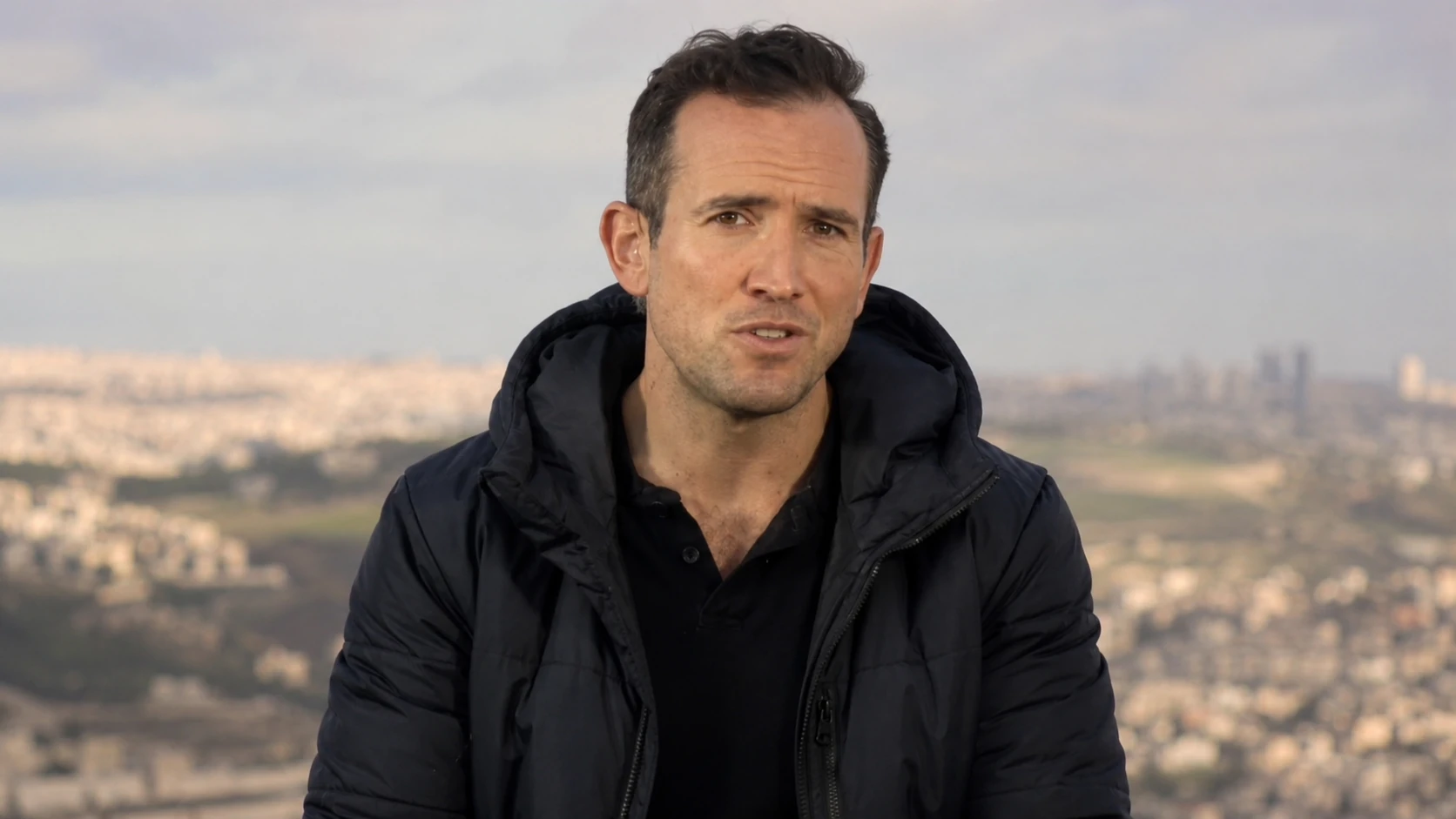
Hugo Bachega became familiar to many viewers in a moment that lasted only seconds. In October 2022, while reporting live for the BBC from Kyiv, he heard explosions nearby, looked away from the camera, and moved out of shot as Russian missiles struck the Ukrainian capital. It was the kind of broadcast that makes the danger of foreign reporting suddenly visible, even to viewers watching safely from home.
That moment did not create his career, but it did bring wider attention to a journalist who had already spent years building one. Bachega is a Brazilian-born British journalist and BBC correspondent whose work has taken him from Reuters in São Paulo to major reporting posts in Cairo, London, Washington DC, Kyiv and Beirut. He is best known for covering Ukraine, Lebanon, Israel, Gaza and the wider Middle East at a time when those stories have carried enormous human and political weight.
Unlike television personalities who cultivate a large public image, Bachega’s profile is mostly professional. Readers searching his name often want to know his age, nationality, family life, education, salary and current role, but many of those personal details are not publicly confirmed. The most reliable story about him is the one visible through his reporting: a career shaped by international news, conflict coverage, careful language and the pressure of explaining fast-moving crises to a global audience.
Early Life and Background
Hugo Bachega is publicly described as a Brazilian-born British journalist. That brief description is one of the clearest verified pieces of biographical information available about his background. It suggests both the Brazilian roots that shaped the beginning of his career and the British media context in which he later became widely known through the BBC.
Detailed information about his childhood, parents, siblings and hometown has not been firmly established in reliable public sources. That absence should not be treated as a mystery to be solved with guesses. Many foreign correspondents keep their family lives private, especially when their work involves conflict zones and politically sensitive reporting.
What can be said with confidence is that Brazil formed the first major public chapter of his professional life. His early bylines at Reuters placed him in São Paulo, covering politics, business and economic stories during an important period in Brazilian public life. That beginning matters because Reuters training often produces journalists who value speed, accuracy, clean sourcing and restraint.
His later career suggests someone comfortable crossing languages, cultures and political systems. Moving from Brazilian domestic reporting into international broadcasting is not a simple change of employer. It requires a reporter to learn how local events connect to global audiences and how to explain unfamiliar places without flattening their complexity.
Education and Early Ambitions
Bachega has not made a detailed public biography of his education widely available. Some online profiles repeat claims about schooling or university, but those details are not consistently supported by strong public records. A responsible profile should avoid turning uncertain information into fact simply because readers are curious.
Still, his career path points clearly toward early interest in journalism, international affairs and public life. Starting at Reuters in São Paulo would have placed him in a newsroom where precision mattered and where young reporters were expected to learn quickly. Wire journalism is demanding because it rewards clear judgment and punishes careless wording.
The kind of stories he covered early also suggests a reporter drawn to power, policy and public consequence. Brazilian elections, industrial investment, competition investigations and economic policy are not celebrity beats or soft features. They require a journalist to understand institutions, official statements, numbers and competing interests.
That foundation helps explain his later work as a BBC correspondent. Whether reporting from Ukraine or Lebanon, Bachega often works in the space between official claims and human impact. His reporting style reflects the habits of someone trained to ask what happened, who said it, what can be verified and what remains unclear.
Starting Out at Reuters in Brazil
Bachega’s early professional record is tied to Reuters, one of the world’s largest international news agencies. Reuters bylines from 2010 and 2011 show him covering Brazilian politics and business, including the presidential race involving Dilma Rousseff and José Serra. Those stories placed him inside one of the most important political transitions in Brazil’s recent history.
He also reported on Brazil’s economy and industrial development. One Reuters story covered Foxconn’s plan to make iPads in Brazil and the broader negotiations around a large investment plan in the country. Another covered allegations of collusion among Brazilian cement makers during a construction boom.
This early work may sound far removed from later reporting in Kyiv or Beirut, but the connection is real. A correspondent who learns how to cover elections, ministries, companies and regulatory disputes gains tools that later become useful in war reporting. Conflict coverage is not only about explosions and front lines; it is also about government decisions, military claims, economic pressure and public trust.
Reuters also trains reporters to write for readers who may know very little about the subject. That habit appears throughout Bachega’s later BBC work. He often explains not only what happened, but why it matters, who is affected and what larger political question sits behind the event.
Moving Into International Reporting
Bachega’s career eventually moved beyond Brazil and into a wider set of international postings. Public professional summaries have placed him in Cairo, London, Washington DC, Kyiv and Beirut. Those cities tell the story of a journalist moving through some of the most important centers of global news.
Cairo would have offered a base in the Arab world and a close view of regional politics. London and Washington DC are major editorial and political capitals, where international stories are shaped for global audiences. Kyiv and Beirut, by contrast, placed him closer to active conflict and its aftermath.
That progression shows a career built through mobility rather than a single beat. Some journalists become known for one country or one institution, but Bachega’s work has crossed regions and formats. He has reported in writing, on television and in live broadcast settings where clarity has to come quickly.
The shift also required a change in public role. A wire reporter often works behind the byline, while a BBC correspondent becomes a visible face and voice for millions of viewers. That visibility can bring recognition, but it also exposes the journalist to instant scrutiny from audiences, officials and advocacy groups.
BBC Career and Public Recognition
Hugo Bachega is best known today as a BBC correspondent. His BBC work has included major international stories, particularly the war in Ukraine and the conflicts involving Israel, Gaza, Lebanon and Hezbollah. He has been publicly identified as a BBC Middle East correspondent, with recent reporting connected to Beirut and the wider region.
The BBC role gave Bachega a larger global audience than most wire-service reporting. BBC correspondents are expected to do more than relay facts; they must help viewers understand why events are unfolding and what may come next. That is especially difficult on stories where facts are disputed, access is limited and language is politically charged.
His reports are often built around a combination of field observation and careful context. In Ukraine, that meant covering Russian strikes, civilian disruption, military developments and the atmosphere inside a country under attack. In the Middle East, it has meant explaining the human and political consequences of fighting involving Israel, Gaza, Lebanon and Hezbollah.
Public recognition grew because viewers repeatedly saw him in places where the news felt urgent. He was not presenting from a studio far from events; he was often near the story itself. That proximity is part of what gives foreign correspondence its authority, but it also brings physical and emotional risks.
The Kyiv Broadcast That Viewers Remember
The Kyiv broadcast in October 2022 became one of the defining public moments of Bachega’s career. He was reporting live from Ukraine’s capital when explosions were heard nearby during a Russian missile attack. The broadcast showed him reacting in real time before moving away from the camera for safety.
The clip spread because it captured something rarely seen so plainly. Viewers are used to hearing correspondents describe danger, but seeing a reporter react to incoming strikes brings the reality much closer. It was a reminder that foreign correspondents often work in conditions where the story can turn dangerous without warning.
That moment also showed the limits of composure. Bachega had been doing the ordinary work of live reporting: speaking clearly, explaining developments and maintaining professional calm. Then the situation changed, and safety came first.
But here’s the thing: the Kyiv clip should not reduce his Ukraine reporting to a viral moment. His broader work from Ukraine included stories on Russian attacks, civilian infrastructure, refugees, military developments and political uncertainty. The clip made him more recognizable, but the sustained reporting is what made the work important.
Reporting the War in Ukraine
Bachega’s Ukraine coverage came during a period when the country was under intense Russian assault and the world was watching closely. Kyiv was not only a capital city but also a symbol of Ukrainian resistance and state survival. Reporting from there required attention to military developments, civilian life and the wider diplomatic stakes.
His work reflected the way war touches daily routines. Stories about missile strikes are also stories about power cuts, water shortages, damaged homes, displaced families and fear. A good correspondent connects the large military event to the ordinary person trying to live through it.
Ukraine also required careful handling of official claims. Both battlefield reporting and government statements can be incomplete, contested or difficult to verify in real time. The task is to tell audiences what is known without overstating what cannot yet be confirmed.
Bachega’s experience in Ukraine strengthened his public identity as a conflict correspondent. It also placed him among journalists whose work helps international audiences understand the human cost of war beyond maps and military briefings. For many viewers, his reports were part of how they followed the conflict’s effect on civilians as well as soldiers.
Middle East Correspondent and Beirut Posting
In recent years, Bachega has become closely associated with BBC coverage of the Middle East. He has reported from Beirut and on stories involving Lebanon, Israel, Gaza, Hezbollah and regional diplomacy. This beat is one of the most difficult in international journalism because history, law, religion, security and human grief are constantly intertwined.
Beirut is a particularly important base for such reporting. Lebanon sits at the center of several regional pressures, including Hezbollah’s political and military power, Israel’s security concerns, Palestinian refugee history, Syrian spillover and fragile domestic governance. A correspondent based there has to understand local politics while also watching the wider regional picture.
Bachega’s Lebanon reporting has included southern border communities, Israeli strikes, Hezbollah’s position after war and questions about whether Lebanese state institutions can regain control in areas long dominated by armed groups. These are not abstract policy issues for people living there. They shape whether families can return home, whether towns can rebuild and whether another war may begin.
His Gaza-related reporting has also placed him near one of the most emotionally charged stories in the world. Covering Gaza, Israel and ceasefire negotiations requires exceptional care because every phrase may be read as a judgment. In that environment, a correspondent’s discipline matters as much as access.
Covering Hezbollah, Israel, Gaza and Lebanon
Bachega’s Middle East work often sits at the crossroads of military action and political meaning. Hezbollah is not only an armed group; it is also a Lebanese political force with deep social roots among many Shia communities. Israel is not only a state responding to security threats; it is also a military power whose actions in Gaza and Lebanon are watched and criticized across the world.
A reporter covering these subjects has to explain different realities at once. Israeli officials frame many actions around security, deterrence and the threat posed by Hamas or Hezbollah. Lebanese and Palestinian civilians often experience those actions through displacement, destroyed homes, grief and uncertainty.
The challenge is not simply to give “both sides” equal space. The challenge is to test claims, show evidence, identify what is unknown and keep the human consequences visible. Bachega’s work has often focused on that practical job rather than on grand commentary.
This beat also brings criticism. BBC Middle East coverage is regularly scrutinized by governments, advocacy groups, viewers and media monitors. Any correspondent working on these stories will face arguments over wording, context and emphasis, and Bachega’s reports have at times been discussed in that larger debate.
Reporting Style and Professional Strengths
Bachega’s style is calm, direct and grounded in observable detail. He is not known for theatrical delivery or highly personal commentary. His strength lies in explaining tense events in plain language while leaving space for what remains uncertain.
That approach suits the BBC format. Viewers need quick orientation, but they also need reporters who do not speak beyond the evidence. In conflict reporting, the temptation to sound definitive can be dangerous, especially when early information later changes.
His Reuters background appears to have shaped that discipline. Agency journalism teaches reporters to strip away excess, attribute claims and move quickly without becoming careless. Those habits carry over well into live broadcast and field reporting.
There is also a human quality to his work. Reports from war zones can become abstract if they focus only on military movements and official statements. Bachega’s reporting often brings the story back to towns, families, infrastructure and the ordinary pressures of life during crisis.
Public Image and Privacy
Hugo Bachega has a public profile, but he is not a celebrity in the usual sense. His name is known because of his reporting, not because he shares large parts of his personal life online. That distinction is important for readers looking for details about his family, marriage, children or private routine.
Reliable public information about his marital status is limited. There is no strong public confirmation of a wife, partner or children. Any profile that states those details as fact without clear evidence should be treated with caution.
His age and exact birth date are also not firmly established in the best available public record. Some websites may offer guesses, but guesses are not biography. A careful account should say plainly that those details have not been publicly confirmed.
This privacy is understandable. Foreign correspondents may work in dangerous environments and often choose not to expose family members or personal routines. In Bachega’s case, the public record points overwhelmingly toward his professional life rather than private disclosure.
Family, Relationships and Personal Life
Readers often search for Bachega’s family background because television reporting creates a sense of familiarity. Viewers see a correspondent during stressful events and naturally become curious about the person behind the report. That curiosity is human, but it does not make private information public.
There is no reliable public record confirming the names of his parents, siblings or close relatives. There is also no confirmed public record of marriage or children. These gaps should be respected rather than filled with weak claims from unsourced websites.
What can be said is that his career would require unusual personal discipline. Foreign correspondents often travel with little notice, work irregular hours and spend long periods in places affected by instability or violence. That kind of work can place pressure on private life, even when the details remain unknown.
Respecting those boundaries does not make the biography incomplete. It makes it accurate. The most meaningful public story about Bachega is not a hidden family narrative but a professional record built across difficult assignments.
Income Sources and Net Worth
There is no credible public figure for Hugo Bachega’s net worth. Any exact claim about his wealth should be treated as an estimate at best, and often as pure speculation. Unlike actors, athletes or corporate executives, foreign correspondents rarely have publicly traceable earnings.
His income is most likely tied to his work as a BBC journalist and correspondent. Depending on contract structure, seniority and assignment, journalists at major broadcasters may earn salaries that vary widely. Without an official disclosure or reliable reporting, it would be misleading to attach a specific number to Bachega.
Some online biography sites publish net worth estimates for journalists, but many of those figures are not based on documents. They often recycle numbers from one another without explaining the method. For a working correspondent, such figures can create a false sense of certainty.
A better way to understand his professional standing is through assignments rather than money. Being trusted to report from Kyiv, Beirut and other major international stories suggests a serious role inside a major newsroom. That is a stronger marker of career significance than an unsupported net worth estimate.
Awards, Recognition and Industry Standing
There is no widely confirmed public list of major personal awards for Bachega. That does not mean his work lacks standing. In journalism, especially foreign reporting, reputation is often built through assignments, reliability and the trust of editors rather than public prizes.
His industry standing can be seen in the nature of his work. Covering Ukraine for the BBC during wartime and serving as a Middle East correspondent are high-responsibility roles. These assignments are usually given to journalists who can handle pressure, risk and complex subject matter.
Recognition has also come from public attention to specific reports. The Kyiv live broadcast made him more visible to international viewers. His ongoing Middle East coverage has kept his name in news searches as conflicts in the region have remained central to world affairs.
Still, it is important not to inflate his public profile beyond the record. Bachega is not a political figure or media celebrity. He is a working foreign correspondent whose influence lies in reporting major events for a global audience.
Where Hugo Bachega Is Now
Hugo Bachega is currently best known as a BBC Middle East correspondent. His recent work has been associated with Beirut, Lebanon, Israel, Gaza and the wider regional fallout from war and ceasefire talks. He remains part of the BBC’s international reporting operation at a time when Middle East coverage is under intense public attention.
His present role places him close to stories that are still changing. Lebanon’s future after conflict with Israel, Hezbollah’s position, Gaza ceasefire efforts and Israeli politics all remain active news subjects. A correspondent in that space must keep updating the story without losing sight of what came before.
Bachega’s current public identity is therefore still unfolding. He is not a retired figure whose life can be neatly wrapped into a finished arc. He is an active journalist covering stories that may define international affairs for years.
For readers, that means the most accurate profile of him should remain open to new information. More details about his career may become public over time, but his private life should not be treated as open material unless he chooses to share it. The record today shows a reporter defined by his work in some of the hardest news environments in the world.
Frequently Asked Questions
Who is Hugo Bachega?
Hugo Bachega is a Brazilian-born British journalist and BBC correspondent. He is best known for reporting from Ukraine and the Middle East, including Lebanon, Israel, Gaza and stories involving Hezbollah. His public profile grew after a live BBC broadcast from Kyiv was interrupted by nearby explosions during Russian missile strikes in October 2022.
What nationality is Hugo Bachega?
Hugo Bachega has been publicly described as Brazilian-born and British. His early journalism career was based in Brazil, where he worked with Reuters in São Paulo. He later became known internationally through his work for the BBC.
Did Hugo Bachega work for Reuters?
Yes, Bachega worked with Reuters before becoming widely known as a BBC correspondent. His Reuters bylines from Brazil included politics, business and economic stories. That early agency experience appears to have shaped his clear, restrained reporting style.
What happened to Hugo Bachega in Ukraine?
In October 2022, Bachega was reporting live for the BBC from Kyiv when explosions were heard nearby during a Russian missile attack. He moved out of the live shot for safety as the situation unfolded. The moment drew wide attention because it showed the real danger faced by correspondents working in war zones.
Is Hugo Bachega married?
There is no reliable public confirmation of Hugo Bachega’s marital status. Claims about a wife, partner or children should be treated carefully unless they come from a strong source. His public record focuses on his journalism, not his private life.
How old is Hugo Bachega?
Hugo Bachega’s exact age and date of birth are not firmly confirmed in reliable public sources. Some websites may offer estimates, but those should not be treated as verified facts. A responsible biography should acknowledge that this information remains private or unconfirmed.
What is Hugo Bachega doing now?
Bachega is currently known for his work as a BBC Middle East correspondent. His recent reporting has focused on Lebanon, Gaza, Israel, Hezbollah and regional conflict. He continues to cover fast-moving international stories for a global BBC audience.
Conclusion
Hugo Bachega’s biography is not the story of a journalist who sought fame. It is the story of a reporter whose work placed him in front of major events, from Brazilian politics to Russia’s war in Ukraine and the volatile politics of the Middle East. His public recognition came through the job itself.
The most revealing thing about him is the pattern of his career. He moved from Reuters in São Paulo into international reporting, then into BBC assignments where clarity, caution and courage were required. That path says more about his professional identity than any unsupported claim about wealth, age or private relationships.
His work matters because he reports from places where the world often wants simple answers and rarely gets them. Ukraine, Lebanon, Israel and Gaza are stories shaped by history, fear, power and loss. A correspondent covering them has to be steady without sounding detached and careful without becoming vague.
For now, Bachega remains an active journalist rather than a completed biography. His record is still being written in bylines, live reports and dispatches from places where events are still moving. That is why people keep searching his name, and why the most honest answer begins with the work.
