

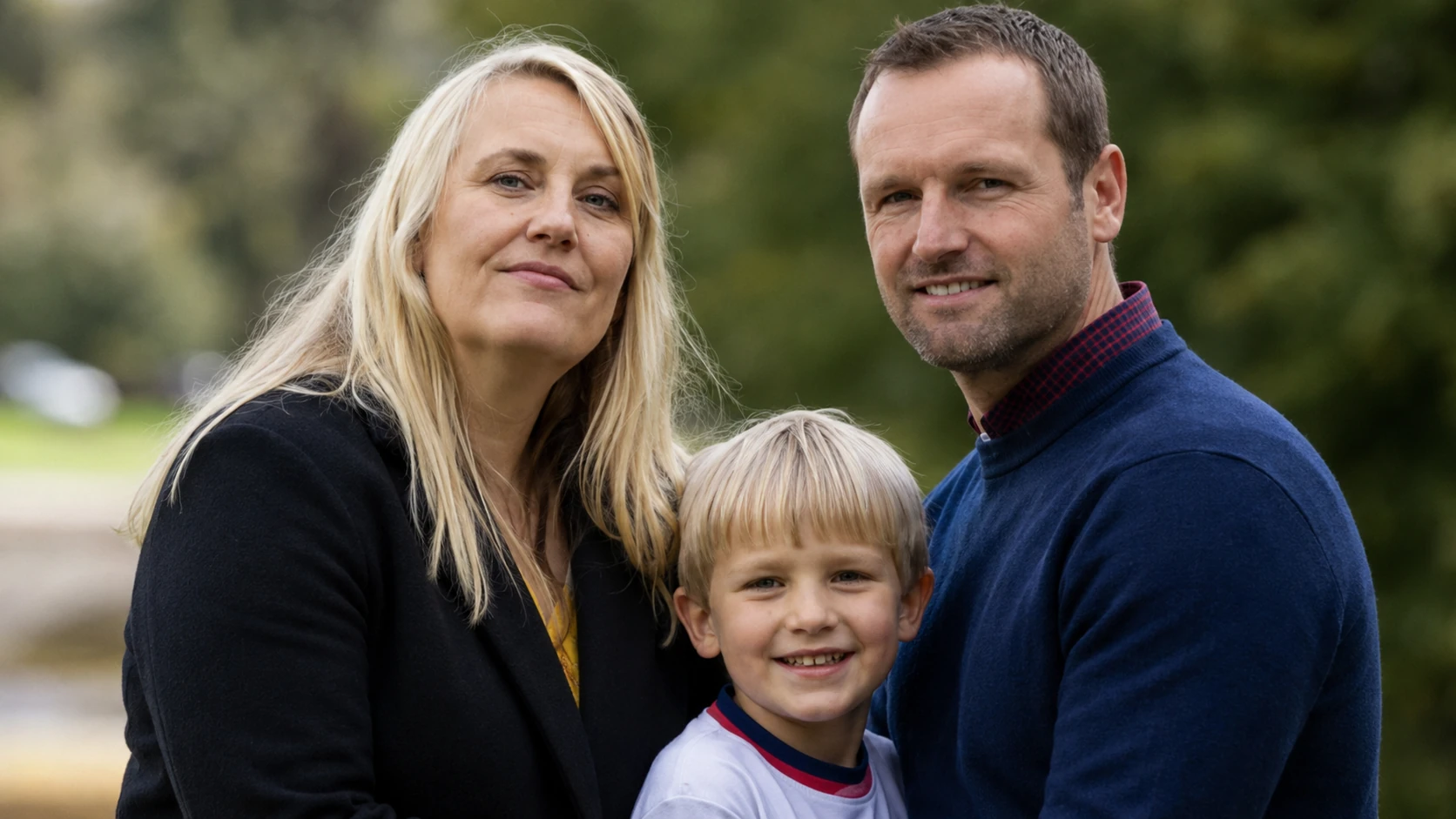
Emma Hayes has spent most of her adult life in football stadiums, training grounds, press rooms, and title races. She became one of the defining managers of modern women’s football through years of work at Chelsea, where she built a dynasty and changed expectations around the women’s game in England. Yet despite her visibility, one question continues to follow her across search engines and social media: who is Emma Hayes’ partner?
The answer is less dramatic than internet speculation often suggests. Hayes has spoken publicly about motherhood, grief, work-life balance, and the demands of elite coaching, but she has kept her romantic life almost entirely private. That decision has created curiosity, especially as her fame grew internationally after becoming head coach of the United States women’s national team. Readers searching for “Emma Hayes partner” usually want clarity about her relationship status, whether she is married, and who shares her life away from football.
What they often discover instead is a portrait of someone who has carefully separated public achievement from private relationships. Hayes has never built her identity around celebrity culture. Even during her most successful years at Chelsea, she spoke more about tactics, leadership, psychology, and player development than about her personal life. That contrast has become part of her public image: one of the most recognizable coaches in world football, yet still deeply protective of the people closest to her.
Early Life and Family Background
Emma Hayes was born on October 18, 1976, in Camden, London, into a working-class family with strong ties to football. She grew up in an environment where the game was part of daily life, even though opportunities for girls in football during the 1980s remained limited. Her father, Sid Hayes, became one of the biggest influences on her life and career, encouraging her passion for the sport long before women’s football received mainstream support in England.
Not many people know this, but Hayes originally dreamed of becoming a professional player rather than a coach. She played as a midfielder during her younger years and developed a serious understanding of the game early on. Injuries eventually pushed her away from playing at the highest level, but they also redirected her ambitions toward coaching. The setback changed her path, though it never weakened her connection to football itself.
Hayes attended Liverpool Hope University, where she studied European studies and sociology. Her academic background later shaped her reputation as one of football’s more thoughtful managers. Players and journalists often describe her as analytical, emotionally intelligent, and unusually articulate compared to many coaches in the sport. That combination of tactical knowledge and emotional awareness became one of her defining strengths.
Her family remained close throughout her rise in football. Hayes frequently credited her father for supporting women’s football at a time when many people dismissed it. Sid Hayes became involved in youth football development and encouraged girls to participate in the game. His death in 2023 deeply affected her, arriving during a period when she was already considering major personal and professional changes.
Building a Coaching Career in America
Long before she became famous in England, Hayes built much of her coaching identity in the United States. After university, she moved to America and worked within college soccer systems during the late 1990s and early 2000s. The experience exposed her to a different football culture, one where women’s soccer already carried stronger institutional support than it did in England at the time.
She coached at Long Island University and later worked with the Iona Gaels women’s team. Hayes also spent time with the Long Island Lady Riders, developing young players while refining her tactical approach. Those years mattered because they gave her leadership opportunities much earlier than she might have received in England. American women’s soccer was already investing in coaching pathways and competitive structures that were still developing across Europe.
The truth is, Hayes’ connection to the United States long predates her appointment as USWNT manager. She often spoke about how formative those years were for her personally and professionally. She learned how to manage athletes, navigate different personalities, and communicate authority in competitive environments. Many people later described her as a modern coach, but the foundations of that style were built decades earlier in the American college system.
Her time in the United States also widened her perspective beyond English football traditions. Hayes developed a reputation for preparation, adaptability, and emotional management rather than relying only on rigid tactical systems. That approach eventually helped her succeed at the very highest level.
Arsenal and the Road to Chelsea
Hayes returned to England and joined Arsenal Ladies as an assistant coach under Vic Akers. Arsenal dominated English women’s football during that era, and the experience exposed Hayes to elite standards and winning culture. She worked with players who would later become legends of the English game, learning what sustained success looked like inside a top club environment.
After Arsenal, she became head coach of the Chicago Red Stars in Women’s Professional Soccer in the United States. The job gave her another major leadership opportunity, though the league itself faced instability. Hayes later described parts of that period as difficult because professional women’s football still lacked financial security and long-term planning. Even so, the experience sharpened her understanding of management under pressure.
Here’s where it gets interesting. When Chelsea appointed Hayes in 2012, the women’s team was nowhere near the dominant force it would later become. Chelsea Women had ambition, but they lacked the sustained culture of excellence Hayes eventually created. She inherited a project rather than a powerhouse.
Over the next twelve years, she transformed the club completely. Chelsea became serial winners under her leadership, collecting Women’s Super League titles, domestic cups, and regular Champions League appearances. Hayes evolved from a respected coach into one of the biggest figures in world football.
The Chelsea Dynasty
Hayes’ Chelsea career turned into one of the defining managerial eras in women’s football history. Under her leadership, Chelsea won multiple Women’s Super League titles and established themselves as England’s strongest domestic side for long stretches of the 2010s and early 2020s. Her teams blended technical quality with physical intensity and mental resilience.
What separated Hayes from many coaches was her ability to constantly evolve. Chelsea changed systems, adapted to opponents, and refreshed squads without losing competitiveness. Players often praised her honesty and directness, even when conversations became uncomfortable. She built demanding environments, but many footballers also described her as fiercely protective of her players away from the pitch.
Her influence extended beyond trophies. Hayes became one of the loudest voices pushing for better treatment of women’s footballers, stronger investment in the women’s game, and higher professional standards. She frequently criticized poor scheduling, unequal resources, and shallow media coverage of women’s football. At the same time, she challenged her own players and staff to raise expectations.
The pressure of that success was enormous. Chelsea competed almost year-round across domestic and European competitions, and Hayes carried the emotional weight of constant leadership. During this period, she was also raising her son Harry while balancing the demands of elite coaching. That tension between work and family later became central to her decision to leave Chelsea.
Emma Hayes Partner and Relationship Status
For many readers, this remains the central question. Emma Hayes has never publicly confirmed a current partner, husband, wife, or spouse through major interviews or official public statements. Some online biographies and entertainment-style websites have linked her romantically to a man named Gavin, but those claims remain poorly sourced and inconsistent.
That lack of confirmation matters. In celebrity culture, repeated claims often begin to sound factual simply because they circulate widely online. Hayes’ case shows why careful reporting still matters. No major sports publication or verified interview has provided clear evidence confirming a spouse or long-term public partner.
Hayes has instead chosen to discuss motherhood and family without publicly detailing her romantic relationships. She appears comfortable sharing certain emotional experiences while keeping intimate relationship details private. That line has remained remarkably consistent throughout her public career.
Some readers assume there must be hidden drama behind that privacy. But here’s the thing. Many elite coaches protect their personal relationships from public attention simply because football already consumes so much of their lives. Hayes has spent years managing one of the most high-pressure jobs in women’s sport. Keeping family life private may be less about secrecy and more about preserving stability.
Motherhood and Personal Loss
One of the most emotional periods of Hayes’ life became public in 2018 when Chelsea announced that she had given birth to a baby boy named Harry. Hayes had previously revealed she was pregnant with twins. Tragically, one of the babies, later identified as Albie, died during pregnancy.
Hayes later spoke openly about the grief she carried after losing one of her sons. Her comments resonated across football because elite sport rarely allows room for vulnerability, especially from managers expected to project constant control. She described the experience as life-changing and admitted the loss would stay with her forever.
At the same time, she continued managing Chelsea through one of the busiest stretches of the season. That period shaped public understanding of Hayes beyond football tactics and trophies. Many supporters saw her not just as a winning manager but as a person carrying extraordinary emotional pressure while continuing to lead a major club.
Motherhood also altered how Hayes viewed work. She later admitted that balancing football with raising Harry became increasingly difficult as Chelsea’s demands intensified. Family support helped, but the constant travel and year-round pressure of club management took a toll. Those realities influenced her thinking about the future.
Why She Left Chelsea
When Hayes announced she would leave Chelsea at the end of the 2023-24 season, the decision shocked many football fans. She had become synonymous with the club after more than a decade of success. Yet those close to the situation understood the move was about more than football ambition.
Hayes eventually accepted the role of head coach of the United States women’s national team. Professionally, it represented one of the biggest jobs in global football. Personally, it also offered a different rhythm of life compared to club management. International football involves intense periods of work, but it does not demand weekly matches across ten months of the year.
She later spoke honestly about the sacrifices required by club football. Hayes admitted her son sometimes resented football because it kept his mother away so often. Those comments gave fans a rare glimpse into the private emotional cost behind elite coaching success.
What’s surprising is how quickly Hayes succeeded in her new role. She joined the USWNT in 2024 and soon guided the team to Olympic gold in Paris. The achievement reinforced her reputation as one of football’s elite coaches while proving she could succeed outside England as well.
Public Image and Influence
By the mid-2020s, Hayes had become much more than a football manager. She was one of the most recognizable voices in women’s sport, frequently discussing leadership, equality, mental health, and performance culture. Her media appearances often attracted attention because she communicated with unusual clarity and confidence.
Unlike many football figures, Hayes rarely relied on clichés. She spoke thoughtfully about pressure, player psychology, and emotional resilience. Journalists regularly described her as one of the best interview subjects in the sport because she combined tactical intelligence with openness and humor.
That said, Hayes could also be confrontational when necessary. She defended her players aggressively and challenged coverage she viewed as unfair or shallow. Some critics occasionally described her as blunt, but supporters saw authenticity rather than media training. Her direct style became part of her appeal.
Her success also changed perceptions of women coaches. Hayes operated in spaces traditionally dominated by men and often outperformed them. By the time she left Chelsea, she was widely regarded as one of the best football managers in the world regardless of gender.
Money, Salary, and Net Worth
Emma Hayes earned substantial income during her years at Chelsea, particularly as investment in women’s football increased. Her move to the United States women’s national team reportedly made her the highest-paid women’s soccer coach in the world at the time of her appointment.
Exact net worth figures vary depending on the source, and many estimates online remain speculative. Most public estimates place Hayes’ net worth somewhere in the multi-million-dollar range, though there is no officially confirmed figure. Her earnings come primarily from football management contracts, media appearances, speaking engagements, and related professional work.
Not many people know this, but Hayes has also worked as a television analyst and pundit during major tournaments. Her broadcasting work strengthened her public profile and added another income stream outside coaching. Networks valued her because she explained football clearly without oversimplifying it.
Despite her success, Hayes has generally avoided flashy celebrity branding. She rarely projects a luxury lifestyle publicly and tends to keep attention focused on football itself. That approach fits the wider pattern of privacy surrounding her personal life.
Life With the United States Women’s National Team
Managing the USWNT brought Hayes into a different kind of spotlight. The American women’s national team carries enormous cultural importance in the United States, far beyond ordinary football coverage. Expectations are relentless because the team has historically defined excellence in women’s international football.
Hayes entered the role during a period of transition. Several veteran stars were aging out of the squad while younger players competed for places. She immediately focused on rebuilding standards, broadening the player pool, and creating tactical flexibility.
Players responded strongly to her methods. Hayes mixed demanding standards with emotional honesty, challenging athletes while encouraging personal accountability. Early results strengthened confidence in her leadership, especially after the Olympic triumph in Paris.
Away from football, the move also appeared healthier for her personally. International management gave Hayes more time between camps and a less exhausting annual schedule compared to Chelsea. After years of nonstop club football, that balance mattered.
The Public Fascination With Emma Hayes’ Private Life
Part of the curiosity around Emma Hayes’ partner comes from contrast. She is intensely public professionally yet intensely guarded personally. Fans know her tactical ideas, emotional leadership style, and career milestones, but they know very little about her relationships away from football.
Social media has intensified that fascination. Online audiences often expect constant access to celebrities and sports figures, including family details. Hayes has resisted that pressure more successfully than many public personalities. She reveals selective parts of her life while maintaining firm boundaries around others.
The truth is, her privacy may actually strengthen public respect for her. Hayes built her reputation through achievement rather than celebrity storytelling. She never relied on public romance or lifestyle branding to remain relevant. Her career speaks loudly enough on its own.
That approach also reflects changing conversations around women in leadership. Female coaches and executives often face more intrusive questions about relationships and family than male counterparts do. Hayes has consistently redirected attention toward her work rather than feeding public curiosity.
Frequently Asked Questions
Who is Emma Hayes’ partner?
Emma Hayes has not publicly confirmed a current partner or spouse. Some online reports mention a person named Gavin, but those claims have not been clearly verified through major interviews or official public statements. Hayes has largely kept her romantic life private throughout her career.
Is Emma Hayes married?
There is no confirmed public record showing that Emma Hayes is married. She has never publicly announced a marriage, husband, or wife. Most reliable reporting focuses instead on her football career and role as a mother.
Does Emma Hayes have children?
Yes, Emma Hayes has a son named Harry, born in 2018. She was originally pregnant with twins, but one of the babies, Albie, died during pregnancy. Hayes later spoke openly about the grief and emotional impact of that loss.
Why did Emma Hayes leave Chelsea?
Hayes left Chelsea in 2024 to become head coach of the United States women’s national team. The move combined professional ambition with a desire for a more sustainable work-life balance after years of nonstop club football.
What is Emma Hayes famous for?
Emma Hayes is famous for transforming Chelsea Women into one of Europe’s strongest football clubs and later becoming head coach of the USWNT. She is widely considered one of the best managers in women’s football history.
What is Emma Hayes’ net worth?
Exact figures are not publicly confirmed. Various estimates place her net worth in the multi-million-dollar range based on coaching salaries, broadcasting work, and speaking engagements. Those numbers remain estimates rather than verified totals.
Where is Emma Hayes now?
As of 2026, Emma Hayes is the head coach of the United States women’s national team. She continues to oversee the team’s rebuild and preparation for future major international tournaments.
Conclusion
Emma Hayes built one of the most impressive careers modern football has seen. She transformed Chelsea into a dominant force, reshaped expectations around women’s coaching, and carried that success onto the international stage with the United States women’s national team. Her public legacy already stands among the sport’s most influential figures.
Yet the continued fascination with “Emma Hayes partner” says something larger about modern celebrity culture. Fans want to understand not only what successful people achieve but also who they are away from work. Hayes has answered some of those questions through her honesty about motherhood, grief, pressure, and ambition. Other parts of her life remain intentionally private.
That boundary appears unlikely to change soon. Hayes has spent decades proving that her value does not depend on publicizing every personal relationship. She became famous because of football intelligence, leadership, and resilience, not because of carefully managed celebrity exposure.
What remains most striking about Emma Hayes is how fully she has shaped her own story. In a profession defined by scrutiny and noise, she has managed to stay visible without giving away everything. For someone who spent her life managing teams under pressure, that may be one of her smartest decisions of all.
