

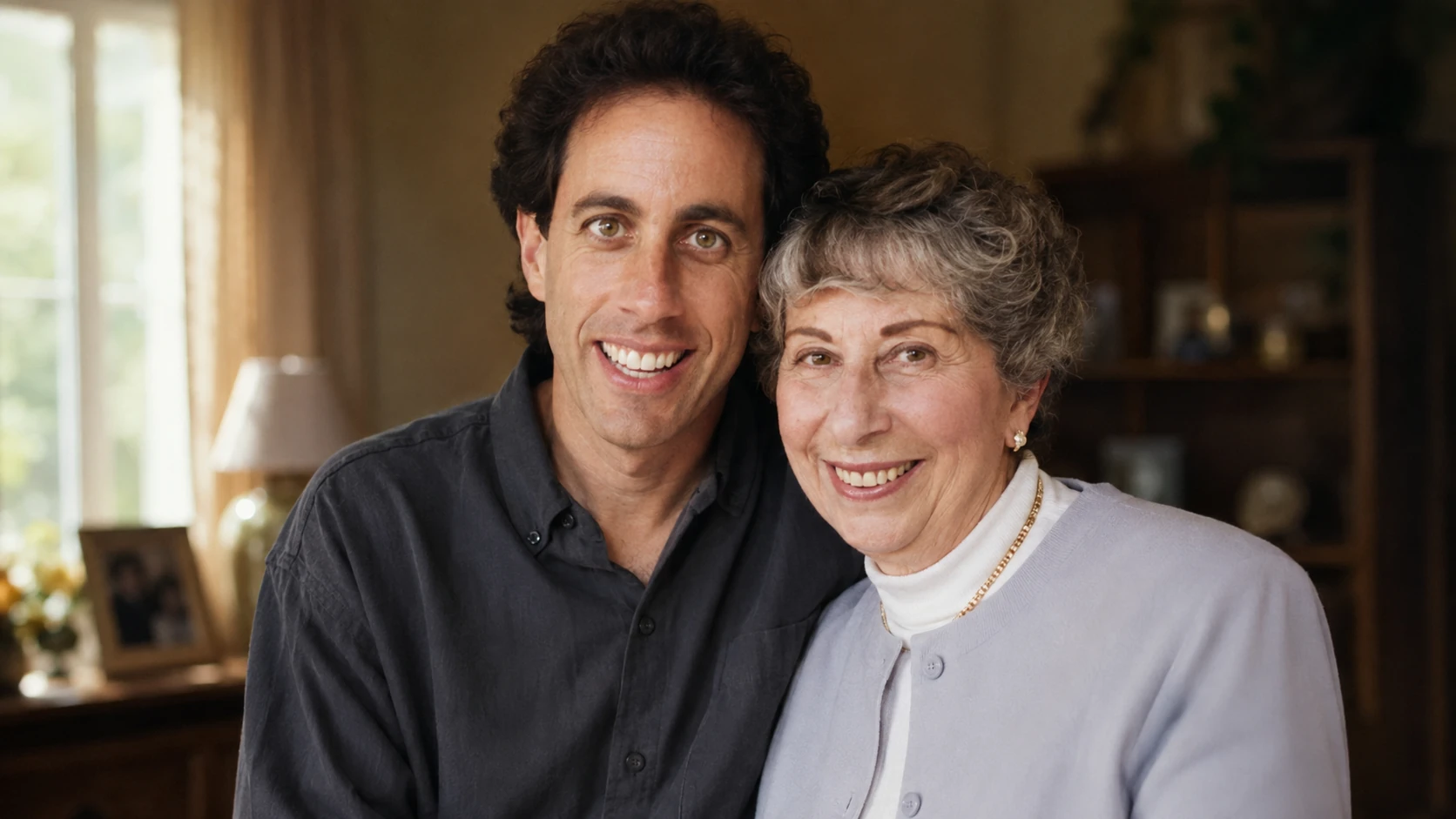
Betty Seinfeld’s name rarely appeared in headlines or magazines during her lifetime, yet she remains a figure of enduring curiosity. Known primarily as the mother of comedian Jerry Seinfeld, she was part of a family that bridged continents, cultures, and generations. For those interested in the roots of one of America’s most celebrated comics, Betty’s story offers insight into the private life that shaped a public persona, showing the influence of family, heritage, and early household dynamics without ever turning her life into spectacle.
Early Life and Family Background
Betty Seinfeld was born Betty Hosni—though some public records list variations such as Hesney—likely in 1915 or 1917, in Aleppo, Syria. Her family belonged to the Syrian Jewish community, which had a longstanding presence in the Middle East. This heritage connected her to centuries of cultural tradition, religious practice, and a diaspora that would eventually see many Aleppo families migrate to the United States. Sources differ on the precise year of her birth, a discrepancy not uncommon for families who moved internationally and dealt with varying documentation practices.
Her marriage to Kalman Seinfeld, a sign maker of Hungarian Jewish descent, brought together two distinct Jewish traditions. Kalman and Betty settled in Brooklyn, New York, where they raised their children amid a working-class environment rich in cultural and religious heritage. Together, they had two children: Carolyn Liebling and Jerry Seinfeld, born on April 29, 1954. Betty’s household combined a strong sense of family responsibility with the quiet challenges of immigrant life in mid-20th-century America. (ancientfaces.com)
Life in Brooklyn and Long Island
Betty Seinfeld’s adult life was largely centered in Brooklyn before the family moved to Massapequa, Long Island, during Jerry’s childhood. This transition mirrored a common pattern among Jewish families in New York during the postwar period, moving from crowded urban neighborhoods to suburban homes while maintaining cultural continuity. For Betty, the move meant managing a household that balanced city-born traditions with the suburban context of Long Island, which was itself becoming a hub for Jewish families seeking better schools, safer streets, and a quieter pace of life.
While Betty largely remained out of the public eye, her household was a place where humor, observation, and resilience were everyday currencies. Accounts from Jerry Seinfeld and his sister suggest that television, stand-up routines, and stories passed down from family members like Kalman played a significant role in shaping the children’s sense of entertainment and observation. Betty’s role as mother, homemaker, and cultural bridge was subtle but foundational.
Parenting Style and Family Influence
Betty Seinfeld’s parenting style has been described through anecdotes from Jerry Seinfeld. In interviews, he has referred to both his parents as “orphans” in an emotional sense, framing his childhood as one where independence was expected early. He described their approach as hands-off, emphasizing self-reliance rather than close supervision or indulgence. While this could be misinterpreted as neglect, it also reflects a household where children were encouraged to navigate social dynamics and develop their own skills—traits that arguably shaped Jerry’s later observational comedy.
Stories shared by the family indicate that Betty sometimes clashed with her son’s early fascination with television. Carolyn Seinfeld recalled that young Jerry spent hours watching comedians, much to Betty’s frustration. Anecdotes suggest she occasionally removed the television to encourage other activities, a small but telling example of parental influence and tension. In a household where humor was already present through Kalman’s jokes and family traditions, Betty’s insistence on limits may have inadvertently encouraged Jerry to refine his observational skills elsewhere. (encyclopedia.com)
Syrian Jewish Heritage and Cultural Roots
Betty’s Syrian Jewish background is a central element of her identity, connecting her to a broader narrative of migration and adaptation. Families from Aleppo were part of a wave of Syrian Jewish migration to New York, particularly during the early 20th century, seeking better economic opportunities and stability. The Aleppo Jewish community maintained strong religious and cultural networks in their new neighborhoods, ensuring continuity of traditions and communal life.
For Betty Seinfeld, this heritage likely influenced household practices, holiday observances, and familial values. These influences blended with the Hungarian Jewish background of her husband, creating a hybrid environment that encompassed multiple Jewish diasporic experiences. While these details are often overshadowed by her son’s fame, they provide crucial context for understanding the cultural milieu in which Jerry Seinfeld grew up. (sephardicheritagemuseum.com)
Betty Seinfeld and Popular Misconceptions
One of the most frequent misunderstandings involves Betty Seinfeld’s connection to the television series Seinfeld. Viewers sometimes assume she inspired the fictional Helen Seinfeld, played by Liz Sheridan, or that she appeared in episodes. In reality, Betty was not a cast member, nor has any verified record confirmed her on-screen presence. The show’s creators used family experiences as material for comedy, but the characters are fictional constructs rather than direct portraits of real people.
Confusion is further compounded by inconsistent online records regarding Betty’s birth year, maiden name, and birthplace. Some genealogical sources list her birth in 1915, others in 1917, and the spelling of her maiden name varies. Given the private nature of her life, these discrepancies should not be taken as attempts at secrecy but as the result of the historical and administrative challenges faced by families moving from Aleppo to the United States.
Later Life and Florida Years
In her later years, Betty Seinfeld relocated to Palm Beach Gardens, Florida, joining the common migration pattern of New Yorkers seeking warmer climates and quieter communities in retirement. She lived there until her death on April 18, 2014. Depending on the source, she was either 96 or 98 years old. Florida’s serene environment contrasted with the bustling Brooklyn and suburban Long Island of her earlier years, marking a quieter phase of life away from public attention.
While Betty remained largely private, her presence was felt through the continued achievements of her children. Jerry Seinfeld’s sustained career in stand-up, television, and various business ventures reflects a foundation built in part on the household she helped manage. Carolyn Seinfeld has also maintained a low-profile life, though she occasionally contributes anecdotes about family history, further illustrating the private but enduring influence of Betty’s role.
Legacy and Influence on Jerry Seinfeld
Betty Seinfeld’s legacy is subtle yet significant. She was a bridge between continents and cultures, a stabilizing force in her household, and a participant in the family environment that nurtured one of America’s most influential comedians. Her influence is less about specific jokes or episodes and more about the conditions she helped create: a home where observation, independence, humor, and cultural memory intersected.
Jerry Seinfeld himself has acknowledged the formative environment of his childhood without attributing specific creative choices to his mother. In interviews, he reflects on the blend of freedom and expectation he experienced, the complex cultural heritage of his family, and the observational habits cultivated in a household that valued self-reliance and storytelling.
Public Recognition and Cultural Impact
Although Betty Seinfeld never sought fame, her name appears in the context of her son’s biography, genealogical studies, and discussions of the real family behind Seinfeld. For historians of American comedy, immigration, and Jewish diaspora communities, she represents a living link between Syrian Jewish traditions and mid-20th-century American family life. Her story is a reminder that behind every public figure lies a constellation of influences, some quiet, some visible, but all shaping the path forward.
Betty’s impact is also felt indirectly through the sitcom itself. Seinfeld drew from the comic timing, familial situations, and social dynamics that were part of her household, illustrating how private family experiences can resonate in widely consumed cultural products. While the character Helen Seinfeld is fictional, the household conditions Betty helped create informed the observational lens through which Jerry would later view the world.
Where Betty Seinfeld Is Remembered Today
Today, Betty Seinfeld is remembered primarily through family records, memorial pages, and biographies of her famous son. Her life exemplifies the experiences of immigrant families, women who managed households across changing decades, and parents who shaped children without ever seeking the spotlight. Public records, genealogical archives, and careful biographical references are the main sources of information, highlighting the importance of distinguishing documented facts from speculation.
Her memory also persists in the curiosity of fans and researchers who seek to understand the origins of one of the most celebrated American comedians. The mix of Syrian Jewish heritage, Brooklyn upbringing, and Long Island suburban life paints a picture of a woman whose life was ordinary in many ways but extraordinary in its quiet contribution to cultural history.
Frequently Asked Questions
Who was Betty Seinfeld?
Betty Seinfeld was the mother of comedian Jerry Seinfeld and the wife of Kalman Seinfeld. She was born Betty Hosni, likely in Aleppo, Syria, and was part of the Syrian Jewish community. She lived most of her adult life in Brooklyn and Long Island before relocating to Florida, where she died in 2014.
What was Betty Seinfeld’s maiden name?
Her maiden name is most commonly listed as Hosni, though some sources spell it Hesney. These variations are due to historical differences in transliteration and immigration records. It reflects her Syrian Jewish roots rather than a professional or public identity.
Did Betty Seinfeld appear on Seinfeld?
No. Betty Seinfeld did not appear on the television show Seinfeld. The character of Helen Seinfeld, Jerry’s mother on the show, was played by Liz Sheridan. While the show drew inspiration from family experiences, the characters are fictional.
When did Betty Seinfeld die?
Betty Seinfeld died on April 18, 2014, in Palm Beach Gardens, Florida. Records differ on her birth year, listing either 1915 or 1917, which makes her age at death either 96 or 98.
What influence did Betty Seinfeld have on Jerry Seinfeld?
Betty Seinfeld influenced Jerry indirectly through the household environment, parenting style, and cultural heritage. She helped cultivate independence, resilience, and observation skills, which became part of his comedic perspective, though she was not directly involved in his creative work.
Where did Betty Seinfeld grow up?
Betty Seinfeld was born in Aleppo, Syria, and later immigrated to the United States. She spent much of her adult life in Brooklyn, New York, before moving to Long Island and finally to Florida. Her upbringing in a Syrian Jewish family shaped her cultural and religious identity.
Are there any public records of Betty Seinfeld?
Public records include birth and death records, genealogical entries, and memorial pages. There are few interviews or personal accounts from Betty herself, so most public knowledge comes from family records and biographical sources about Jerry Seinfeld.
Conclusion
Betty Seinfeld lived a life largely outside the public spotlight, yet her influence rippled through the family environment that shaped one of America’s most recognized comedians. Her journey from Aleppo to Brooklyn, Long Island, and finally Florida reflects the immigrant experience and the quiet persistence of cultural heritage across generations. While she did not seek public recognition, her role as mother, wife, and custodian of family traditions ensured that her legacy persists in subtle, enduring ways.
Her story underscores the importance of family context in shaping creative talent. Betty’s household provided both structure and freedom, exposure to humor and discipline, and a blend of Syrian and Hungarian Jewish traditions that enriched her children’s upbringing. These conditions, more than any direct intervention, contributed to the observational lens that Jerry Seinfeld would later bring to the world stage.
In the end, Betty Seinfeld’s life reminds us that influence is not always visible, and that the quiet work of parenting and cultural preservation can resonate far beyond the home. She was a bridge between continents and generations, a private figure whose subtle guidance shaped an enduring comedic legacy.
