

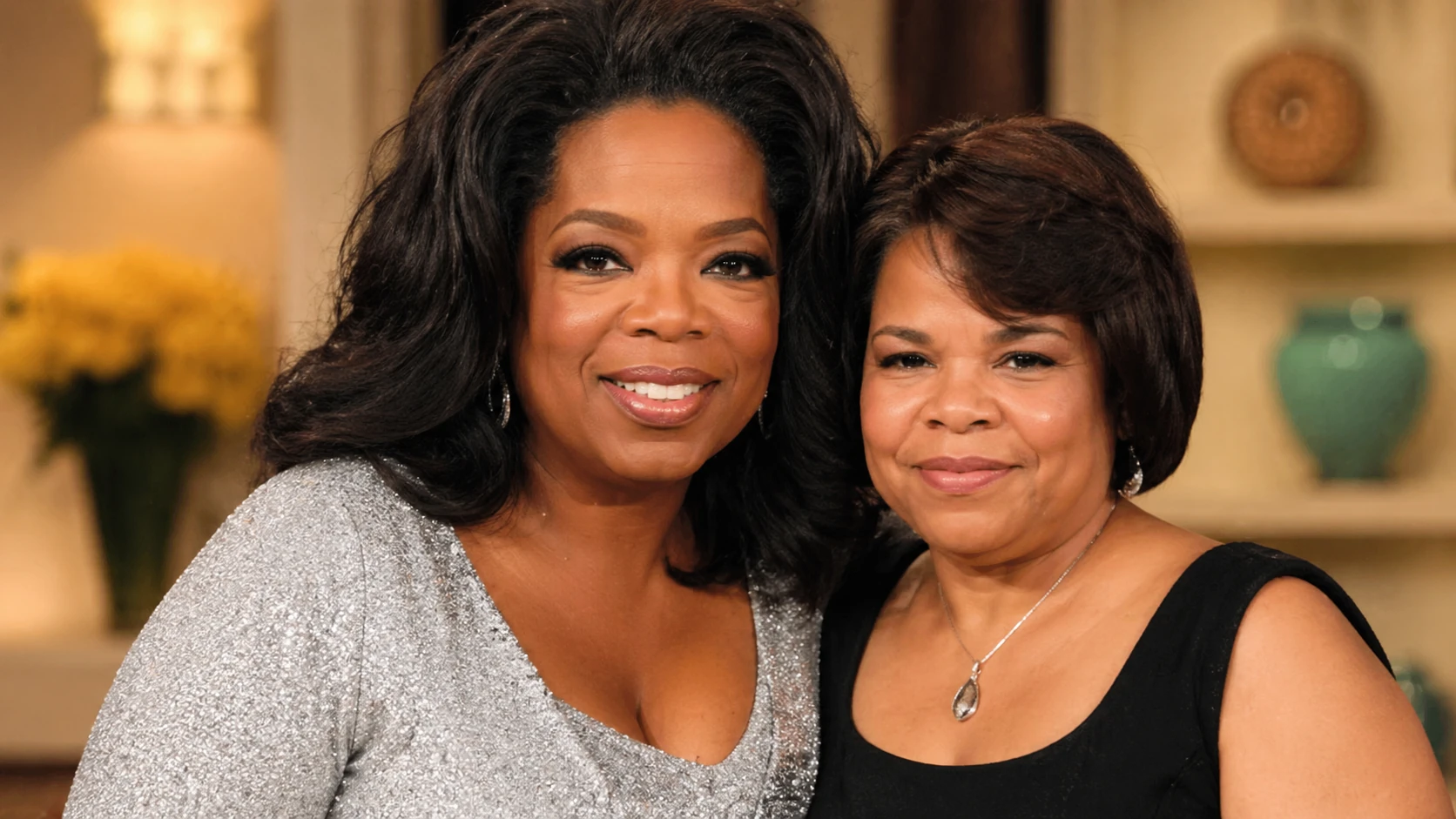
Patricia Lofton entered public life in a way few people could imagine. She was not an actor, politician, author, or business figure chasing attention. She became known because, after decades of questions about her birth family, she discovered that her biological mother was Vernita Lee and that one of her half-sisters was Oprah Winfrey.
The revelation could have become a tabloid spectacle. Instead, Patricia’s story became memorable because of how quietly she handled it. She did not sell her story, force a public confrontation, or turn a private family matter into a media campaign. By the time Oprah introduced her to viewers in 2011, Patricia had already shown the quality that would define her public image: patience, restraint, and a deep wish to belong.
Early Life and Adoption
Patricia Lofton was born in Milwaukee, Wisconsin, on April 26, 1963. Her birth mother was Vernita Lee, who was also the mother of Oprah Winfrey. At the time of Patricia’s birth, Vernita was not in a position to raise another child, and Patricia was placed for adoption.
Patricia’s early years were shaped by separation and uncertainty. She spent time in foster care before being adopted as a child. Like many adoptees, she grew up with questions that paperwork alone could not answer. She wanted to know where she came from, who her family was, and why she had been given up.
That search for identity became one of the central facts of her life. Patricia did not grow up inside the Winfrey family, and Oprah did not know that she existed. Their lives moved forward on separate tracks for nearly five decades. One sister became one of the most famous women in the world, while the other built a private life in Wisconsin.
The Family She Did Not Know
Patricia was born into a family already marked by distance, struggle, and loss. Vernita Lee had several children, including Oprah Winfrey, Patricia Lee Lloyd, Jeffrey Lee, and Patricia Amanda Faye Lee, the woman widely known as Patricia Lofton. The shared names have caused confusion online, especially because Oprah had another half-sister named Patricia who died in 2003.
Oprah was born in Mississippi in 1954 and spent parts of her childhood between Mississippi, Milwaukee, and Nashville. By the time Patricia was born in 1963, Oprah was living away from Vernita. That fact helps explain why Oprah did not know about the baby placed for adoption. It also shows how family histories can split into separate stories without anyone fully seeing the whole picture.
The family Patricia later discovered had already endured major grief. Oprah’s half-brother Jeffrey died in 1989, and her half-sister Patricia Lee Lloyd died in 2003. Those losses meant that when Patricia Lofton finally entered the family’s public story, she did so against a background of absence as much as reunion. Her arrival did not erase the past, but it added a new chapter to it.
Growing Up Away From Fame
Patricia’s childhood and young adulthood were not lived in the public eye. Reliable public information about her schooling, early jobs, and private household is limited, and that privacy should be respected. What is known is that she became a mother young and raised children of her own while continuing to carry questions about her biological family.
She had a daughter, Aquarius, when she was 17, and later had a son named Andre. Her children became part of her search story because they encouraged her to keep looking for answers. That detail matters because Patricia’s search was not only about herself. It was also about giving her children a clearer sense of their family roots.
There is no evidence that Patricia sought fame before learning of her connection to Oprah. She lived far from the world of studios, book clubs, celebrity interviews, and public philanthropy that defined Oprah’s career. That contrast became part of why the reunion drew so much attention. It was the meeting of two women connected by blood but separated by circumstance, class, and public visibility.
Searching for Her Birth Family
Patricia began looking for her biological family years before the public learned her name. Adoption searches often move slowly, especially when records are sealed, incomplete, or emotionally difficult for relatives to discuss. Patricia’s first efforts did not give her immediate closure. Like many adoptees, she had to wait, try again, and piece together fragments.
A major step came in 2007, when she obtained information from adoption records. Those records indicated that she had siblings and offered clues about their ages, locations, and family circumstances. Patricia later connected those details to information she saw in a television interview with Vernita Lee. The pieces began to fit in a way that pointed toward Oprah’s family.
Even then, Patricia did not rush to the media. She tried to reach the family privately, including attempts to contact Vernita. Those efforts did not immediately lead to a meeting. For many people, that kind of rejection or silence would have been enough to create anger, but Patricia’s public story is marked by a different response. She kept the information close and waited for the truth to be handled within the family.
Discovering the Connection to Oprah Winfrey
The moment Patricia suspected she was related to Oprah was extraordinary, but it was not based on a wild guess. The adoption records and Vernita Lee’s public comments appeared to line up. Details about siblings, deaths, and family structure gave Patricia reason to believe she had found her biological relatives. It was the kind of discovery that could change a life overnight, but confirmation still mattered.
Oprah eventually learned of Patricia’s existence in 2010. For Oprah, the news was startling because she believed she already knew the main facts of her family history. She had built a career partly on honest conversations about pain, identity, and personal truth. Yet this truth had been hidden even from her.
The discovery carried emotional weight on every side. Patricia had to face the fact that her birth mother had not come back for her. Vernita had to face a decision she had kept private for decades. Oprah had to absorb the knowledge that she had a sister who had been living not far from her mother’s world, unknown to her for nearly fifty years.
The 2011 Public Reveal
Oprah introduced Patricia Lofton to the public on January 24, 2011, during one of the final seasons of The Oprah Winfrey Show. The episode was promoted as a major family secret, and unlike many television reveals, it was not built around scandal. It was built around recognition. Oprah told viewers that she had recently learned she had a half-sister.
The reveal mattered because Oprah had spent years helping other families tell difficult truths on television. Viewers had watched reunions, confessions, apologies, and searches for lost relatives unfold on her stage. This time, the story belonged to Oprah herself. That reversal gave the episode an unusual emotional force.
Patricia appeared as a calm and grounded presence. She did not present herself as a victim, though her story involved real pain. She spoke as someone who wanted family, answers, and peace. That tone helped the public understand why Oprah responded to her so warmly.
Why Her Discretion Changed the Story
One of the most important facts about Patricia Lofton is what she did not do. After suspecting she was Oprah’s half-sister, she did not sell the information to a tabloid. She did not give interviews designed to pressure Oprah. She did not turn the discovery into a public demand.
For Oprah, that discretion mattered deeply. Oprah had lived for decades as a person whose private life carried enormous commercial value. Family secrets, personal relationships, and painful history could all become headlines if someone chose to profit from them. Patricia chose not to do that.
That decision shaped her public image from the beginning. She was not introduced as someone trying to take advantage of Oprah’s fame. She was introduced as someone who had protected the truth until it could be addressed within the family. In a celebrity culture that often rewards exposure, Patricia became known for restraint.
Relationship With Vernita Lee
Patricia’s relationship with Vernita Lee was one of the most delicate parts of the story. Vernita had placed Patricia for adoption in 1963 and carried that fact privately for decades. During the public reunion, Vernita acknowledged that she had not been able to raise Patricia at the time. Her explanation did not erase the pain, but it gave context to the decision.
For Patricia, meeting Vernita was not a simple happy ending. She had spent years wondering about the mother who gave birth to her. She had also tried to make contact before the family reunion became public. The emotional reality was more complicated than a television moment could fully capture.
Still, the public record shows an effort at recognition. Patricia was later listed among Vernita’s surviving daughters after Vernita died in Milwaukee in 2018. That official family acknowledgment matters because it placed Patricia inside the family history that had once excluded her. It was a quiet but meaningful form of belonging.
Relationship With Oprah Winfrey
Patricia and Oprah’s relationship began late in life, which makes it different from the sibling bonds formed in childhood. They did not share bedrooms, school years, family holidays, or the ordinary memories that usually tie sisters together. What they shared was blood, a mother, and the strange experience of finding each other after decades apart.
Oprah responded to Patricia with visible emotion and respect. She praised Patricia’s decision not to sell the story and described the reunion as a powerful moment in her life. Over time, Oprah also supported Patricia in practical ways, especially around education and housing. That support became one of the clearer signs that the relationship continued beyond the television episode.
The sisters have not made their relationship a constant public subject, which is probably healthy. Their connection began under extraordinary public attention, but it did not need to become a recurring media event. Patricia’s privacy and Oprah’s fame require a balance. From what is publicly known, they found a way to honor the bond without turning it into spectacle.
Education and a Long-Held Dream
One of the most meaningful chapters in Patricia’s public story came after the reunion. Patricia had long wanted to continue her education. With Oprah’s support, she was able to focus on that goal. Reports at the time said Oprah helped Patricia with a home and a monthly allowance so she could pursue school.
Patricia enrolled at the University of Wisconsin-Milwaukee. She studied sociology, a field that fit naturally with her stated interest in helping people. Given her own background in foster care and adoption, that direction made emotional sense. Her life had given her direct knowledge of systems that affect families, children, and identity.
In December 2017, Patricia graduated from UWM with a Bachelor of Science degree in sociology. She was 54 years old. Oprah attended the graduation ceremony with Stedman Graham, turning an ordinary commencement into a widely reported family milestone. The achievement belonged to Patricia, though, and it showed that her story after the reunion was not only about being found.
Career Goals and Public Contributions
Patricia has spoken publicly about wanting to help others, especially through work connected to social service. Some reports said she hoped to become a social worker, though her exact current profession has not been widely confirmed. It is fair to say that her education and public comments point toward a desire to serve people rather than build a celebrity career.
That distinction is important. Patricia’s claim to public attention is not based on a long entertainment career or business empire. It is based on a family discovery and the way she handled it. Still, her later pursuit of education gave the story a second act that belonged more fully to her own choices.
There is limited reliable information about her day-to-day work today. Some online profiles make claims about her employment, income, or personal projects without clear sourcing. A careful biography should avoid presenting those claims as fact. What can be said is that Patricia used the opportunities that followed the reunion to pursue a goal she had held for years.
Money, Housing, and Net Worth
Patricia Lofton’s finances have drawn public interest because of her connection to Oprah Winfrey, one of the richest self-made women in America. Several reports have said Oprah bought Patricia a home in Wisconsin and provided financial support while Patricia pursued her education. The home was widely reported to have cost about $490,000. Those reports fit with Oprah’s public support of Patricia’s long-held dream to graduate from college.
That does not mean Patricia’s personal net worth is publicly known. Many websites assign dollar amounts to her without citing reliable financial records. Those figures should be treated as estimates at best and unsupported guesses at worst. Patricia is not a public-company executive, elected official, or entertainer with a documented salary history.
Her income sources are also not clearly public. She has not built a known media brand around her relationship to Oprah, and there is no strong evidence that she became wealthy through celebrity exposure. The safest statement is that Patricia has received significant support from Oprah, including help tied to housing and education, but her exact net worth remains unverified.
Public Image and Media Attention
Patricia’s public image has stayed unusually steady. She is usually described as Oprah’s half-sister, but the tone around her has been more respectful than sensational. That is partly because Oprah framed the story herself and partly because Patricia did not behave like someone chasing headlines. The first impression she gave the public was of a woman who valued privacy and family.
Media interest in Patricia tends to return during stories about Oprah’s family. Articles about Oprah’s siblings often mention Patricia alongside Jeffrey Lee and Patricia Lee Lloyd. Those pieces help correct the family timeline, but they rarely provide new information about Patricia’s current life. Her choice to stay mostly private has limited the amount of reliable new material available.
That privacy has worked in her favor. Public curiosity remains, but Patricia has not become trapped in a cycle of constant exposure. She occupies an unusual place: widely recognized by name, yet still largely outside celebrity culture. For someone whose life changed because of a famous family tie, that is a rare outcome.
Common Confusion About Her Name
The name “Patricia Lofton” is the one most readers search, but public references to her vary. She has also been identified as Patricia Lee and Patricia Amanda Faye Lee. That variation reflects family records, media usage, and the complexity of adoption and reunion stories. It can confuse readers who are trying to verify basic facts.
The bigger confusion involves Oprah’s other half-sister, Patricia Lee Lloyd. Patricia Lee Lloyd, often called Pat, was a different person and died in 2003. Patricia Lofton is the half-sister Oprah discovered years later and publicly introduced in 2011. Mixing the two creates errors in timelines, family relationships, and death records.
That distinction is essential for any accurate biography. Oprah had more than one sibling named Patricia in public records, and each had a separate life story. Patricia Lofton’s story is the story of the sister placed for adoption in 1963 and reunited with Oprah decades later. Patricia Lee Lloyd’s story is part of the family’s earlier grief and should not be confused with it.
Where Patricia Lofton Is Now
Patricia Lofton appears to live a private life, with no recent verified public profile comparable to the attention she received in 2011 and 2017. She has not become a regular television personality, author, influencer, or spokesperson. That makes current details limited, but it also fits the pattern she has shown from the beginning. Patricia has never seemed interested in turning her family story into a full public career.
What is known is that she achieved a major personal goal by graduating from the University of Wisconsin-Milwaukee. She also became publicly recognized as part of Oprah’s family after years of separation. Those facts remain the most reliable markers of her later life. They are more meaningful than the unsupported claims that often appear in search results.
Her current status is best described with care. Patricia is publicly known as Oprah Winfrey’s half-sister, a Milwaukee-born adoptee, a mother, and a college graduate who pursued sociology in midlife. Beyond that, much of her private life has not been confirmed. Respecting that boundary is part of telling her story accurately.
Why Patricia Lofton’s Story Still Matters
Patricia Lofton’s life matters because it shows how family truth can arrive late and still change everything. Her story is not only about celebrity connection. It is about adoption, secrecy, shame, patience, and the human need to know where one comes from. Those themes reach far beyond Oprah’s audience.
The story also matters because Patricia handled extraordinary information with rare care. Many people would have seen a connection to Oprah as a financial opportunity or a shortcut to public attention. Patricia treated it as a family matter first. That choice shaped how the world saw her.
There is also a lesson in timing. Patricia did not receive every answer when she first wanted them. She did not meet her biological family as a child or young adult. Her reunion came after she had already lived much of her life, raised children, and formed her own identity. That makes the story less like a fairy tale and more like real life.
Frequently Asked Questions
Who is Patricia Lofton?
Patricia Lofton is Oprah Winfrey’s younger half-sister. She was born in Milwaukee, Wisconsin, on April 26, 1963, to Vernita Lee and was placed for adoption at birth. Oprah did not know about Patricia for decades and introduced her publicly in 2011 on The Oprah Winfrey Show.
How is Patricia Lofton related to Oprah Winfrey?
Patricia and Oprah share the same mother, Vernita Lee. Patricia was born when Oprah was a child and living away from Vernita, which helps explain why Oprah did not know about her. Their relationship became public after Patricia searched for her birth family and the connection was confirmed.
Was Patricia Lofton adopted?
Yes, Patricia Lofton was placed for adoption after her birth in 1963. She spent part of her childhood in foster care before being adopted. Her later search for her biological family became the path that eventually led her to Vernita Lee and Oprah Winfrey.
Did Patricia Lofton sell her story?
No reliable account shows that Patricia sold her story. In fact, Oprah publicly praised her for not going to the media after discovering the possible family connection. Patricia’s discretion became one of the most respected parts of the story.
Does Patricia Lofton have children?
Yes, Patricia Lofton is known to have two children, a daughter named Aquarius and a son named Andre. Her children encouraged her to continue searching for her birth family. That encouragement became part of the chain of events that led to her eventual reunion with Oprah.
What did Patricia Lofton study in college?
Patricia Lofton studied sociology at the University of Wisconsin-Milwaukee. She graduated in December 2017 with a Bachelor of Science degree. Oprah attended the ceremony, making the graduation a public family milestone.
What is Patricia Lofton’s net worth?
Patricia Lofton’s exact net worth is not publicly verified. Some websites publish estimates, but they are not backed by clear financial records. It is confirmed through reporting that Oprah helped Patricia with major support tied to housing and education, but Patricia’s personal wealth remains private.
Conclusion
Patricia Lofton’s biography is not a typical celebrity story. She did not become known because she sought fame, and she did not use her connection to Oprah as a public platform. Her story entered the world because she wanted answers about her own life and found a family secret much larger than she expected.
The most striking part of Patricia’s public image is her restraint. She had information that could have drawn instant attention, but she chose privacy first. That decision helped turn a potentially sensational story into one about trust, recognition, and late-blooming family connection.
Her later graduation from the University of Wisconsin-Milwaukee gave the public another reason to remember her. It showed that after the reunion, Patricia still had her own dreams to pursue. She was not only Oprah’s sister; she was a woman finishing something important for herself.
Today, Patricia Lofton remains a private person connected to one of the most famous families in American media. Her story still draws interest because it touches something deeply human: the longing to know one’s origins and the courage it takes to face the truth when it finally arrives.
