

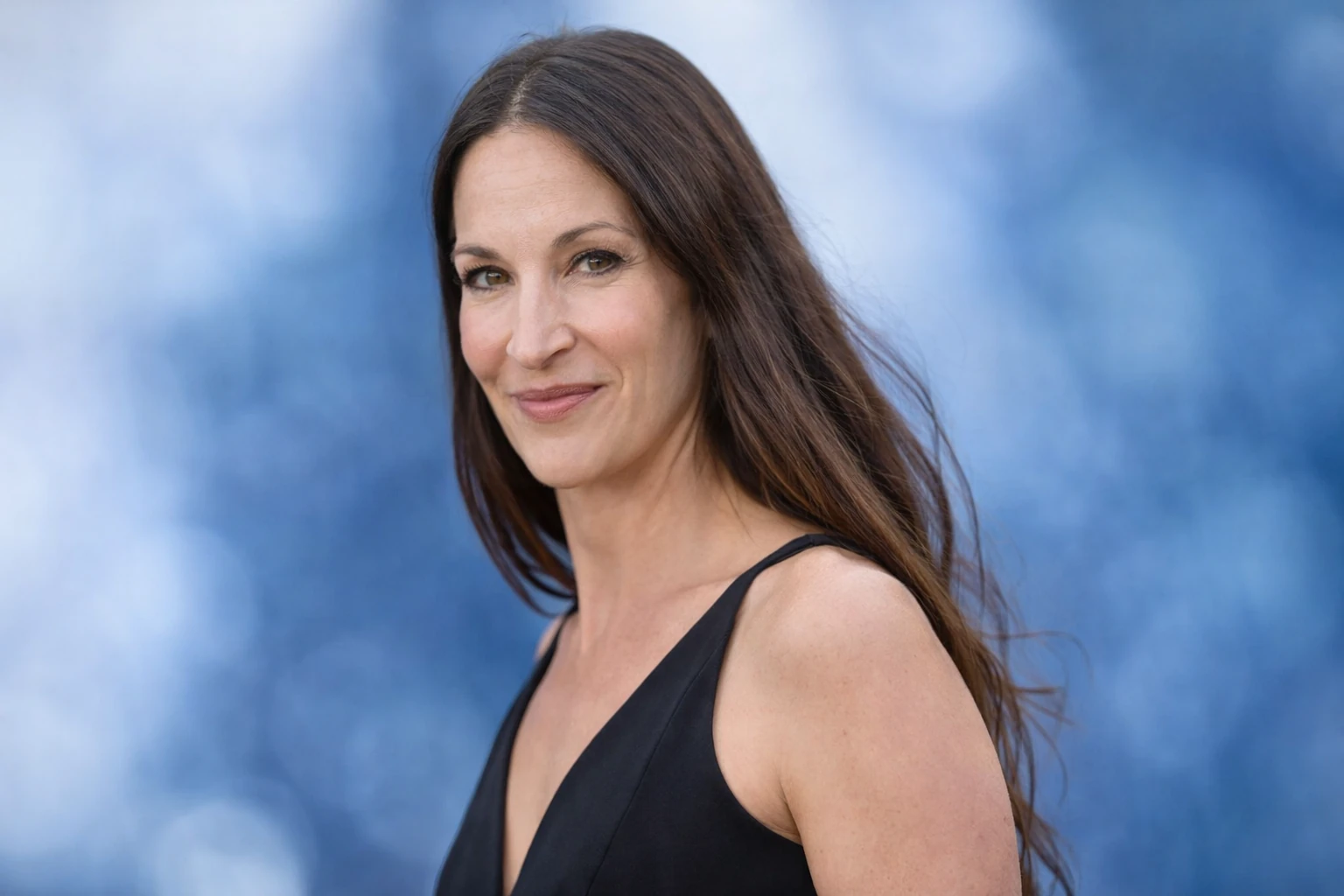
A Cambridge faculty room is not where most people expect to see a protest staged without clothing. But in 2016, economist Victoria Bateman walked into a meeting at the University of Cambridge with nothing on but a pair of shoes and a message painted across her body: “Brexit leaves Britain naked.” The moment traveled far beyond academic circles, turning her into an unlikely public figure. For Bateman, it was not a stunt detached from her work. It was, in her view, a direct extension of it.
Search for “victoria elizabeth bateman,” and you may find fragments pointing in different directions. But the most substantial, well-documented public figure connected to that name is Victoria Bateman, the British economic historian, author, and outspoken feminist who has spent years arguing that the story of economic progress is incomplete without women at its center. Her career has blended scholarship, activism, and cultural confrontation in a way that few academics attempt, and even fewer sustain.
Early Life and Family
Victoria Bateman was born and raised in Tameside, Greater Manchester, in northern England. She has described her background as working class, rooted in a family connected to the region’s long history in the cotton industry. Her own account places her among generations of cotton mill workers, a detail that carries weight in her later work on industrialization and economic change.
Growing up in Oldham, she attended local state schools rather than elite private institutions. That early environment, shaped by the aftereffects of industrial decline, exposed her to economic realities that would later define her intellectual interests. The region had once been a center of textile production, but by the late twentieth century it had experienced job losses, economic shifts, and social strain.
Those conditions left an impression. Bateman has said her upbringing made questions about wealth, inequality, and opportunity feel immediate rather than abstract. The distance between economic theory and everyday life was not something she had to imagine; she had already seen it in practice.
Education and Academic Formation
Bateman’s academic path led her to the University of Cambridge, where she studied economics. From there, she moved to the University of Oxford, completing both a master’s degree in economic and social history and a doctorate in economics. The combination of disciplines shaped her approach in lasting ways.
Many economists specialize in mathematical modeling or contemporary policy. Bateman took a different route, grounding her work in history while keeping an eye on how economic ideas connect to social structures. Her training at Oxford exposed her to long-term data, archival research, and debates about how economies evolve over centuries.
After completing her doctorate, she returned to Cambridge in 2009 as a Fellow in Economics at Gonville and Caius College. She also became Director of Studies in Economics, a role that involves teaching, mentoring, and overseeing students’ academic progress. Her academic career has been firmly anchored in Cambridge ever since, even as her public profile expanded far beyond it.
Early Research and Academic Work
Bateman’s early scholarly work focused on economic history, particularly the development of markets in Europe before industrialization. One of her notable research contributions examined wheat markets in early modern Europe, challenging the assumption that markets simply improved in a steady, linear fashion over time.
Her findings suggested a more complex pattern. Markets in some parts of Europe were highly integrated earlier than expected, followed by periods of fragmentation before later expansion. That research questioned simple narratives about economic progress and pointed toward the importance of institutions, political stability, and broader social forces.
This line of thinking carried into her first major book, Markets and Growth in Early Modern Europe. In it, Bateman explored whether the rise of markets alone could explain Europe’s economic transformation. Her conclusion was cautious. Markets mattered, but they were not the whole story.
That approach—testing familiar assumptions and expanding the scope of explanation—would become a hallmark of her later work. Even in her early academic phase, she showed a willingness to challenge widely accepted economic narratives.
Expanding the Argument: Women and Economic History
Over time, Bateman’s focus shifted toward a larger and more controversial question: what role did women play in shaping economic development? Her answer was far more ambitious than simply adding women into existing accounts.
In her 2019 book The Sex Factor: How Women Made the West Rich, Bateman argued that women’s freedoms were central to the economic success of Western societies. She linked changes in marriage patterns, fertility rates, labor participation, and social norms to broader economic outcomes. The argument was clear: societies that gave women more autonomy tended to become more prosperous.
The book drew attention for both its thesis and its tone. Bateman did not present her argument as a minor adjustment to existing theory. She framed it as a correction to a male-centered narrative that had overlooked key drivers of economic change.
Reception was mixed but engaged. Some reviewers praised the book for bringing fresh attention to gender in economic history, while others questioned the scale of its claims. That mix of interest and skepticism became a recurring pattern in responses to her work.
Naked Feminism and Public Protest
Bateman’s public image changed dramatically as she began to combine her academic arguments with highly visible activism. Her use of nudity in protests and public appearances became one of the most discussed aspects of her career.
She has explained this choice as a deliberate challenge to what she calls the “cult of female modesty.” In her view, women are often judged based on how they present their bodies, and this judgment affects how seriously they are taken in professional and intellectual settings. By appearing naked while continuing to speak as an economist, she aims to expose that bias.
Her 2016 anti-Brexit protest at Cambridge brought widespread media attention. Similar appearances followed, including a notable moment at a Royal Economic Society event where she wore little more than body paint spelling out “RESPECT.” These actions sparked debate within academic and public circles.
Supporters saw her as confronting double standards in a direct and memorable way. Critics argued that the performances distracted from her scholarship or risked overshadowing her ideas. Bateman, for her part, has maintained that the two cannot be separated. The reaction to her body, she argues, proves her point about how women are perceived.
Writing and Public Voice
Alongside her activism, Bateman has continued to write for both academic and general audiences. Her book Naked Feminism, published in 2023, builds on her earlier arguments while focusing more explicitly on cultural attitudes toward women’s bodies.
In that work, she examines how expectations around modesty shape everything from social behavior to public policy. She connects issues such as sexual autonomy, reputation, and economic participation, arguing that they are more closely linked than often acknowledged.
Her writing style is direct and accessible, aimed at readers beyond academic specialists. She has also contributed to media outlets and appeared on BBC programs, including Radio 4’s Understand: The Economy. These appearances have helped position her as a public intellectual rather than a purely academic figure.
In 2025, she published Economica: A Global History of Women, Wealth and Power. The book expands her earlier arguments to a global scale, tracing the role of women across thousands of years of economic development. It reflects her ongoing effort to reframe economic history through a different lens.
Academic Influence and Criticism
Bateman’s work has not gone unchallenged. Within economics, her broad claims about gender and development have sparked debate. Some economists question whether the evidence supports such sweeping conclusions, while others argue that her approach brings necessary attention to neglected areas.
She has also been critical of the discipline itself. Bateman has argued that modern economics often overlooks history and social context, focusing too narrowly on models and abstract theory. She sees this as part of the reason why issues like gender inequality have been sidelined.
Her involvement in reports on gender imbalance in economics reflects this concern. Research she has contributed to has highlighted the underrepresentation of women in the field, particularly at senior levels. These findings align with her broader argument that economics has been shaped by a limited range of perspectives.
The debate around her work is ongoing. What’s clear is that she has forced discussions that might otherwise remain confined to smaller academic circles.
Personal Life and Relationships
Compared to her public activism and writing, Bateman’s personal life remains relatively private. She has not made her relationships, marriage status, or family life a central part of her public identity, and reliable information on these topics is limited.
This absence is not unusual for academics, but it stands in contrast to the level of attention her public actions receive. While her professional and political views are widely discussed, her private life has not been the focus of confirmed reporting.
That said, her background and upbringing continue to shape how she presents herself. She often references her working-class roots and family history as part of her intellectual journey, suggesting that personal experience plays a role in her perspective on economic issues.
Income, Career Earnings, and Net Worth
As an academic at Cambridge, Bateman’s primary income comes from her university position, which includes teaching, research, and administrative responsibilities. She also earns income from book sales, speaking engagements, and media appearances.
Exact figures for her net worth are not publicly confirmed. Estimates occasionally appear online, but they vary widely and lack reliable sourcing. It is more accurate to say that her earnings reflect a combination of academic salary and author income rather than the large-scale wealth associated with celebrities or major business figures.
Her influence, in many ways, is less about financial success and more about intellectual and cultural impact. She occupies a space where academic work intersects with public debate, and that position does not always translate into easily measurable financial outcomes.
Public Image and Cultural Impact
Bateman’s public image is shaped by contrast. She is both a Cambridge economist and a figure associated with provocative protest. That combination makes her difficult to categorize, which may be part of her appeal.
Media coverage often focuses on her activism, but her supporters argue that this attention can obscure the substance of her work. At the same time, the visibility created by those moments has helped bring her ideas to a wider audience.
Her influence can be seen in ongoing discussions about gender in economics, as well as in debates about how academics engage with the public. She has shown that it is possible to step outside traditional academic roles, though not without controversy.
Where Victoria Bateman Is Now
As of 2026, Victoria Bateman remains active as a scholar, author, and speaker. Her recent work continues to explore the relationship between gender and economic development, with a broader global perspective than in her earlier writing.
She continues to lecture, write, and participate in public discussions. Her role at Cambridge remains a central part of her career, providing a base for both teaching and research.
Her trajectory suggests that she is unlikely to retreat into a quieter academic role. Instead, she appears committed to maintaining a public presence, using both traditional scholarship and unconventional methods to make her arguments heard.
Frequently Asked Questions
Who is Victoria Elizabeth Bateman?
The name most commonly refers to Victoria Bateman, a British economist and economic historian at the University of Cambridge. She is known for her research on economic history, her books on gender and development, and her high-profile feminist activism. Some online references also connect the full name to individuals outside academia, which can cause confusion.
What is Victoria Bateman known for?
She is best known for arguing that women’s freedoms are central to economic development. Her books, including The Sex Factor and Economica, explore this idea in historical and global contexts. She is also widely recognized for her use of nudity in political and feminist protests.
Why did she protest naked?
Bateman has said that her use of nudity is intended to challenge how women are judged based on their bodies. She argues that expectations around modesty affect how seriously women are taken in professional and public life. Her protests are designed to make those attitudes visible.
What books has she written?
Her major works include Markets and Growth in Early Modern Europe, The Sex Factor, Naked Feminism, and Economica. These books cover economic history, gender, and the role of women in shaping economic systems. They are aimed at both academic and general readers.
Is Victoria Bateman married?
There is no widely confirmed public information about her marital status or personal relationships. She has kept her private life largely out of the spotlight, focusing her public presence on her work and activism.
What is her net worth?
Her net worth is not publicly confirmed. Estimates found online vary and are not considered reliable. Her income is likely derived from her academic position, book sales, and speaking engagements.
Conclusion
Victoria Bateman occupies a rare position in modern intellectual life. She is an academic who has chosen to engage directly with the public, often in ways that invite strong reactions. That choice has shaped both her reputation and the reach of her ideas.
Her work challenges readers to rethink familiar stories about economic development. By placing women at the center of those stories, she questions assumptions that have long gone unexamined. Whether one agrees with her conclusions or not, her arguments have added urgency to debates about gender and economics.
What defines her career is not just the ideas she presents but the way she insists on presenting them. She has taken risks that many academics avoid, and those risks have made her both visible and controversial. That visibility has ensured that her work is discussed far beyond the boundaries of her field.
For readers searching her name, the most useful way to understand Victoria Bateman is to look past the headlines and into the substance of her work. The arguments she makes, and the reactions they provoke, continue to shape how her story is told.
