

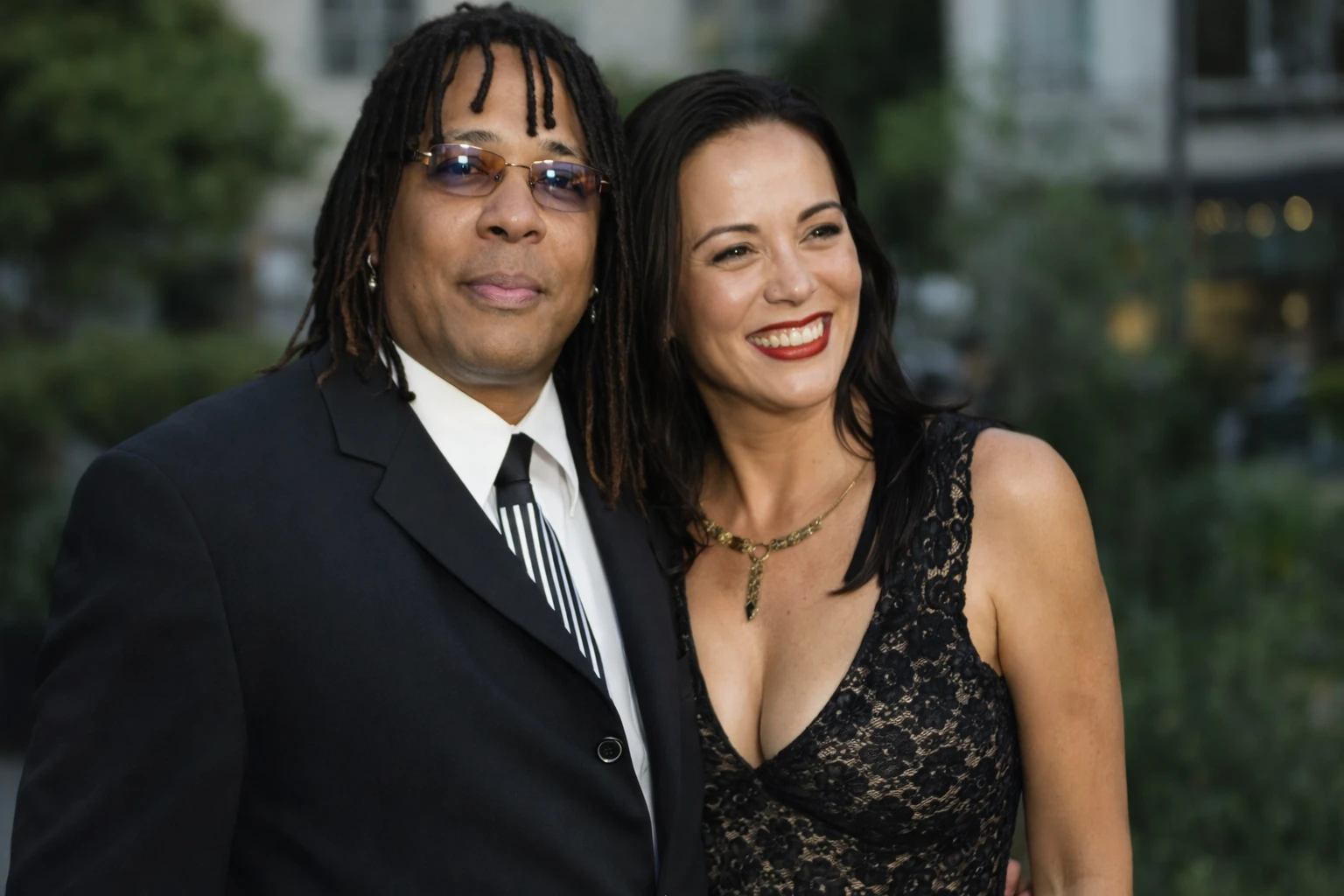
In the early 1990s, Tanya Hijazi appeared in public mostly as a glamorous figure beside one of funk music’s most volatile stars. Cameras caught her at events with Rick James, a man whose talent and excess defined an era. But within a few years, her name would be pulled into a criminal case that reshaped both of their lives and permanently altered how she would be remembered. Since then, Tanya Hijazi has remained a figure people search for often, even as verified details about her life remain limited and uneven.
Her story sits in a complicated place between public record and private retreat. She is known as Rick James’s former wife, the mother of his son Tazman James, and a participant in one of the most widely reported legal cases of the musician’s life. At the same time, she has never fully stepped into the spotlight as a celebrity in her own right. What emerges instead is a portrait shaped by fragments: court documents, archival images, film credits, and scattered mentions across decades of media.
Early Life and Background
Details about Tanya Hijazi’s early life remain among the least verified parts of her biography. Publicly available records do not offer a consistent or well-documented account of her birthplace, childhood, or education. Various online biographies claim different origins and timelines, but many of these claims lack reliable sourcing and appear to repeat one another rather than drawing from primary documentation.
What can be said with some confidence is that Hijazi came of age during a period when Los Angeles and the broader entertainment industry offered both opportunity and instability. By the time she entered the public eye, she was already connected to creative circles, suggesting at least some involvement in fashion, styling, or production environments. Those early associations would later surface in her documented work in costume departments and entertainment projects.
The absence of a clearly established early biography is unusual for someone tied to a major cultural figure. But it also reflects a broader pattern: Hijazi’s life has rarely been told on its own terms. Instead, her early years are often glossed over in favor of the period when she became publicly linked to Rick James.
Entering Rick James’s World
Tanya Hijazi’s public life becomes clearer once her relationship with Rick James begins. By the early 1990s, she was appearing alongside him at events and in media coverage, positioned as his partner during a time when his career was already marked by both success and decline. James, known for hits like “Super Freak,” was also battling severe drug addiction, and his personal life had grown increasingly chaotic.
Their relationship unfolded in that turbulent context. Hijazi was not simply a passive presence; she was part of James’s immediate circle during a period when his behavior and legal troubles were escalating. Photographs from the time show her at high-profile gatherings, suggesting a life that moved between celebrity culture and the private volatility surrounding James.
Their marriage is widely documented, though specific dates vary depending on the source. What remains consistent is that they were legally married and later divorced, and that their relationship was deeply intertwined with the most unstable years of James’s life. That connection would define how the public came to know her name.
The 1993 Case That Changed Everything
In 1993, Tanya Hijazi became a central figure in a criminal case that drew national attention. The charges stemmed from an incident involving Mary Sauger, a music executive who had been invited to a meeting with Rick James at a hotel in West Hollywood. What followed was an assault that prosecutors described as severe and deliberate.
Hijazi pleaded guilty to assault with a deadly weapon with intent to cause great bodily injury. The case was widely reported at the time, not only because of its seriousness but also because of James’s involvement. He faced his own charges, and together their legal troubles dominated headlines.
But the story did not present a simple narrative of perpetrator and accomplice. During court proceedings, prosecutors acknowledged that Hijazi herself had been subjected to abuse by James. Reports from the time described incidents in which James had physically harmed her, including acts that left visible injuries. This context played a role in how the court ultimately handled her sentencing.
Initially sentenced to four years in prison, Hijazi’s term was later reduced to two years. A judge cited her status as a victim of abuse as a factor in that decision. The ruling did not erase her conviction, but it added a layer of complexity that continues to shape how her role in the case is understood.
The legal case marked a turning point. After it, Hijazi’s public identity would be tied less to celebrity appearances and more to the fallout of that moment. It also coincided with Rick James’s own imprisonment, effectively ending the life they had shared in the public eye.
Life After Prison
What happened after Tanya Hijazi served her sentence is far less documented. Unlike many figures connected to high-profile cases, she did not reemerge through interviews, memoirs, or television appearances aimed at telling her side of the story. Instead, she largely stepped away from public attention.
There are indications that she continued to work in entertainment-related roles. IMDb credits her in the costume and wardrobe department for the 2005 film The Unseen, suggesting a return to behind-the-scenes work. She also appears in connection with documentary projects about Rick James, including I’m Rick James and the later documentary Bitchin’: The Sound and Fury of Rick James.
These credits offer a glimpse into a quieter professional path. Rather than pursuing visibility, Hijazi seems to have remained close enough to the industry to contribute, while avoiding the kind of exposure that might invite renewed scrutiny. It is a pattern consistent with someone seeking stability after a highly publicized and traumatic period.
Still, the available record does not provide a detailed account of her day-to-day life or career progression in the years immediately following her release. That absence has left space for speculation, but it also underscores her apparent decision to maintain privacy.
Motherhood and Family Life
One of the most clearly documented aspects of Tanya Hijazi’s life is her role as the mother of Tazman James. Tazman, born during her relationship with Rick James, has occasionally appeared in public contexts connected to his father’s legacy. His presence has provided one of the few consistent links between Hijazi and the broader narrative surrounding James.
Archival images from Rick James’s memorial service in 2004 include both Hijazi and Tazman, placing them within the family circle during a moment of public remembrance. These appearances suggest that, despite the turmoil of the past, her connection to James’s family remained visible.
Beyond that, details about her family life remain largely private. There is little verified information about whether she remarried or had additional children. Many online sources make claims about her personal relationships, but these are not supported by strong documentation and should be treated cautiously.
What is clear is that motherhood became a central part of her life. In contrast to her earlier public image, which was shaped by proximity to celebrity and scandal, her later years appear to be defined more by family and personal boundaries.
Work in Film and Documentary Projects
Tanya Hijazi’s involvement in film and documentary work provides one of the few measurable aspects of her professional life. Her credit in The Unseen places her within the costume department, a role that often requires both creative skill and technical knowledge. While not a high-profile position, it reflects meaningful participation in film production.
Her connection to documentaries about Rick James is also significant. These projects, particularly Bitchin’: The Sound and Fury of Rick James, have played a role in reintroducing James’s story to new audiences. Hijazi’s presence in that context suggests that she remains part of the historical record surrounding his life.
What’s interesting is how these appearances function. They do not position her as a central narrator or public figure. Instead, they reinforce her role as someone who was present during key moments and whose perspective contributes to a fuller understanding of those events.
At the same time, the limited scope of her credits highlights the gap between verified work and the broader claims often made about her career. While she has documented experience in entertainment, there is no strong evidence that she built a large or highly visible professional profile.
Public Image and Media Portrayal
Tanya Hijazi’s public image has been shaped less by her own actions and more by the way media narratives have framed her. In the early 1990s, coverage often cast her as part of Rick James’s entourage, emphasizing glamour and association with fame. After the 1993 case, that framing shifted dramatically toward crime and controversy.
Over time, her image has softened into something quieter and more ambiguous. In retrospective documentaries and articles about Rick James, she appears as a figure connected to his personal life rather than as a headline subject. This shift reflects both the passage of time and her own withdrawal from public life.
The truth is that her story resists easy categorization. She has been portrayed at different times as a partner, a co-defendant, a victim, and a witness to a turbulent era. Each of those roles contains elements of truth, but none fully defines her.
That complexity is often lost in shorter online profiles, which tend to reduce her to a single identity. A more careful reading of the record shows that her life has moved through several distinct phases, each shaped by different circumstances and pressures.
Net Worth and Financial Standing
Reliable information about Tanya Hijazi’s financial situation is limited. Many websites assign her a net worth figure, often ranging from modest estimates to more substantial sums. However, these numbers are rarely supported by verifiable financial disclosures or reporting.
What can be inferred is that her income has likely come from a combination of entertainment-related work and any financial arrangements connected to her marriage and subsequent life. Without confirmed data, any specific net worth figure should be treated as speculative.
This uncertainty reflects a broader pattern in celebrity-adjacent biographies. Readers often expect clear financial summaries, but in cases like Hijazi’s, the available evidence does not support precise conclusions. A cautious approach is more accurate than repeating unsupported estimates.
Where Tanya Hijazi Is Now
One of the most common questions people ask is where Tanya Hijazi is today. The honest answer is that there is little confirmed information about her current life. She has not maintained a public-facing presence through interviews, social media, or recent media coverage that would provide clear updates.
This absence suggests a deliberate choice to live outside the spotlight. After the events that brought her name into public attention, it is understandable that she would seek a quieter existence. Her occasional association with documentary projects indicates that she has not entirely disappeared from public record, but she has not pursued visibility.
For many readers, this lack of information can feel unsatisfying. But it also reflects a reality that is often overlooked: not every figure connected to fame continues to live publicly. In Hijazi’s case, privacy appears to be a defining feature of her later life.
Frequently Asked Questions
Who is Tanya Hijazi?
Tanya Hijazi is best known as the former wife of musician Rick James and the mother of his son Tazman James. She became widely known in the early 1990s due to her involvement in a criminal case connected to James. She has also worked in film production, including roles in costume departments and documentary projects.
Was Tanya Hijazi married to Rick James?
Yes, Tanya Hijazi was married to Rick James. Their relationship took place during a turbulent period in his life, and they later divorced. The marriage is well documented, though specific dates vary across sources.
Did Tanya Hijazi go to prison?
Yes, she served time in prison after pleading guilty in 1993 to assault with a deadly weapon. Her sentence was initially set at four years but later reduced to two years, partly due to evidence that she had been abused by Rick James.
Does Tanya Hijazi have children?
She has one publicly known child, Tazman James, whom she shares with Rick James. He has appeared in public contexts related to his father’s legacy.
What does Tanya Hijazi do for a living?
Her documented work includes roles in the costume and wardrobe departments of film projects, as well as appearances in documentaries about Rick James. There is limited verified information about her current professional activities.
What is Tanya Hijazi’s net worth?
There is no confirmed public record of her net worth. Estimates exist online, but they are not supported by reliable financial data and should be viewed with caution.
Where is Tanya Hijazi now?
There is little verified information about her current location or activities. She appears to have chosen a private life, with only occasional connections to documentary projects related to Rick James.
Conclusion
Tanya Hijazi’s life does not fit neatly into the categories that often define public figures. She entered the public eye through association with a famous musician, became known through a serious legal case, and then stepped back into relative obscurity. Each phase of her life has been shaped by forces both within and beyond her control.
What stands out is not a single defining achievement or identity, but the way her story reflects the complexities of proximity to fame. Being close to a powerful and troubled figure like Rick James brought visibility, but it also brought consequences that extended far beyond the spotlight.
Her later years suggest a different set of priorities. By choosing privacy over continued exposure, she has avoided the cycle of reinvention that often follows public scandal. That choice has left gaps in the record, but it has also allowed her to exist outside the narratives that once defined her.
In the end, Tanya Hijazi remains a figure best understood through careful attention to what can be proven and respect for what cannot. Her story is incomplete, but it is also deeply human—a reminder that not every life connected to fame is meant to be fully documented or publicly explained.
